
- Collection
Telehealth: Innovations in Health Technology
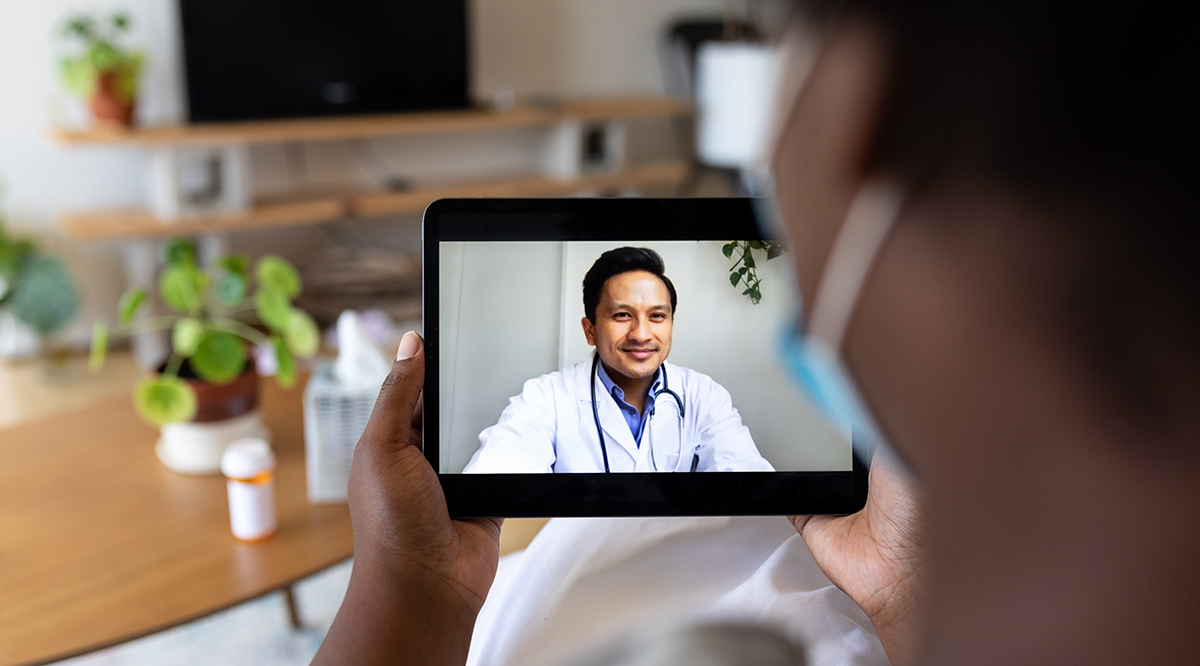
Telehealth — the use of technology to deliver care at a distance — offers many benefits to health systems, providers, and patients.
Over the last five years, the use of telehealth has risen dramatically as health systems responded to the COVID-19 pandemic and continue to adopt strategies to improve access to care. As academic health systems (AHSs) continue to sustain and scale these digital health strategies, it is important to understand how telehealth impacts medical education and training, the delivery system and its workforce, and patients’ access to care. Additionally, AHSs play an important role in not only sharing best practices from implementation and scaling, but also in evaluating the impact of telehealth on quality, access, outcomes, and patient experience and engagement.
This collection of resources:
- Shares learnings across academic medicine about telehealth implementation and training.
- Provides regulatory updates on recent telehealth policies.
- Highlights how the AAMC and its members are implementing and using telehealth to provide high-quality care and improve access.
- Uncovers insights from research and other literature about the impact of telehealth on access and the workforce.
On this page:
AAMC Telehealth Initiatives and Publications

2026 Digital Health and AI Collaborative
Now in its fifth year, the AAMC and Manatt Health’s Digital Health and AI Collaborative serves as an advanced forum for health system leaders to explore what works — and what doesn’t — in digital health and artificial intelligence (AI) implementation. Programming includes an in-person site visit, monthly virtual workshops, policy updates, facilitated virtual coffee chats, programmatic and telehealth benchmarking, and in-person community-building at national conferences. Participants gain practical insights and benefit from candid peer learning and networking, with conversations bridging policy, operations, and innovation.
To learn more, email an AAMC Telehealth team member.
Project CORE: Implementing eConsults and Enhanced Referrals
The AAMC has supported health systems in implementing eConsults (asynchronous communication between primary care providers and specialists) and improving communication and coordination at the point of referral since 2014. Initially launched at five academic health systems through a Center for Medicare and Medicaid Innovation Health Care Innovation Award, Project CORE(R) has now expanded to over 55 health systems and children’s hospitals. The model has been shown to improve timely access to specialty input, yield positive patient and provider experience, reduce no-show rates and leakage rates, improve comprehensiveness in primary care, and improve coordination of care between primary care providers and specialists.
To learn more, email a Project CORE representative.
AAMC Telehealth Technology and Functionality Recommendations to Promote Patient-Centered and Equitable Care
In 2024, the AAMC developed a core set of functional requirements and recommendations regarding technology and infrastructure when selecting devices for furnishing a range of telehealth services to address barriers to care, improve access to care for all patients, promote digital inclusion, and deliver high-quality patient-centered care, particularly in communities that have been economically or socially underserved. Recognizing that innovations in technology are not static, we have created adaptable best practices for functional requirements that can both withstand and support the fluidity of innovations. Download AAMC Telehealth Technology and Functionality Recommendations to Promote Patient-Centered and Equitable Care (PDF).
Digital Health Equity Current Practices and Approaches of Academic Medical Centers
Digital tools such as patient portals, telehealth, and mobile apps have become an integral aspect of health care delivery. This 2023 report highlights the roles academic medical centers are playing to improve digital health equity and identifies opportunities and evolving approaches that health systems can adapt, implement, and scale. Download Digital Health Equity Current Practices and Approaches of Academic Medical Centers.
Effective Strategies for Sustaining and Optimizing Telehealth in Primary Care
In 2023, Vizient and the AAMC partnered to study telehealth sustainability in primary care, including general internal medicine, family medicine, and geriatrics. The goal of this project was to understand variations across AHSs in use of telehealth to deliver adult primary care beyond the COVID-19 pandemic, explore AHSs’ motivations for sustained telehealth use, understand how sustained use was achieved, and study associated implications on clinical performance. Effective strategies outlined in this report can be utilized by health systems and primary care leaders working to expand and further leverage telehealth within their primary care services. Download Effective Strategies for Sustaining and Optimizing Telehealth in Primary Care.
Sustaining Telehealth Success: Integration Imperatives and Best Practices for Advancing Telehealth in Academic Health Systems
This report, published in 2021 as part of the AAMC Future of Academic Medicine Series, helps health system leaders and telehealth managers to critically assess, design, implement, and integrate telehealth programs across mission areas. It presents effective strategies and successful practices from leaders at 15 AHSs with leading telehealth programs. Download Sustaining Telehealth Success: Integration Imperatives and Best Practices for Advancing Telehealth in Academic Health Systems.
Telehealth Equity
AAMC Telehealth Equity Catalyst (TEC) Awards
Since the program’s inception in 2021, the Telehealth Equity Catalyst (TEC) Awards have recognized the promising telehealth initiatives that AHSs are using to address and mitigate barriers to care. These awards have helped AHSs to innovate and advance adaptable telehealth strategies and best practices with the goal of ensuring accessible high-quality care for all, particularly underserved and under-resourced communities.
Learn more about the TEC Awardees.
Questions? Please contact an AAMC Telehealth team member.
Advancing Health Equity Through Telehealth: AAMC Learning Series
Through this learning series, the AAMC highlighted the role of academic medicine in promoting and advancing health equity using telehealth and health technology. Key elements of the series focused on understanding the impact of telehealth on equity and access to care, the role data can play in improving telehealth access, and evolving best practices used by health systems to improve digital health literacy and narrow the digital divide. Register to access the webinar recordings, slides, and related resources.
This work supported “Addressing the Digital Divide to Improve Vaccine Access & Information,” a supplemental award (#6NU50CK000506-02-01) funded under a cooperative agreement from the Centers for Disease Control and Prevention.
Why Improving Telehealth Access is Key to Health Equity
The benefits of digital health tools are many. They include fast access to providers, better care management, and patient convenience. But many U.S. adults don’t have the ability to tap into this resource.
As academic medicine integrates digital health tools and uses them across patient care, health systems must understand today’s health disparities and how to address them.
Courtney Lyles, PhD, and Urmimala Sarkar, MD, co-founders of SOLVE Health Tech and faculty at the University of California, San Francisco, are working on doing just that. They say that for academic health systems to continue to innovate while also meeting the needs of underserved communities, providing digitally inclusive care is imperative. Learn more in the video above.
Telehealth and Medical Education
Telehealth Competencies Across the Learning Continuum
In July 2026, the AAMC published a new edition of Telehealth Competencies Across the Learning Continuum. The updated competencies reflect the evolution of virtual care, with clearer developmental progression and greater emphasis on digital fluency, remote monitoring, patient-generated data, and contemporary telehealth practice. Academic medicine leaders, educators, health professions faculty, clinicians, and others can use the framework to strengthen curricula, assessment, and faculty development.
Discover more resources to support integration of the competencies into medical education:
- Access educational activities in MedEdPORTAL to support integration of training and curricula across the continuum.
- Learn how the 2023 Competency-Based Education in Telehealth Challenge Grant Program awardees developed and integrated training in telehealth across the continuum.
Telehealth Regulatory and Policy Resources
Medicare provides payment for a variety of telehealth services, which offer patients and providers a variety of benefits that both improve continuity of care and expand access to care. Congress and the Centers for Medicare & Medicaid Services have provided health systems, faculty physicians, and other providers with a variety of regulatory flexibilities and waivers originally implemented in response to the COVID-19 public health emergency, allowing them to rapidly implement telehealth across provider settings and practices.
The AAMC supports and advocates for these flexibilities to become permanent, as telehealth offers long-term promise in expanding access to and providing quality health care in the future.
Learn about regulatory and policy issues in telehealth services using the resources listed below:
The Center for Connected Health Policy also provides resources on telehealth policies, focusing on federal, state, and private payer policies, state licensure laws, and federal legislation.
For current policy and regulatory updates, please visit the Policy and Regulatory Issues page and subscribe to Washington Highlights.
Email questions to an AAMC Regulations team member.