aamc.org does not support this web browser.
  • AAMCNews

    Practicing medicine in a war zone

    When conflict erupted in the Middle East, academic health centers sprang into action to protect patients, staff, and trainees. Here’s what life is like at two U.S.-affiliated health systems.

    American University of Beirut

    American University of Beirut

    Getty Images

    Military attacks in the Middle East have strained health care resources, terrorized and displaced care workers, and interrupted medical training. Here is how two academic health centers in the region have coped with the ongoing strife.

    American University of Beirut Medical Center

    Doctors at the American University of Beirut Medical Center, where many victims of the bombardment are brought from Lebanon’s southern region for care, are no strangers to conflict. Thus far in 2026, the war has killed more than 3,000 people and injured at least 9,000 others in the country. Similarly, the 2024-25 Lebanon-Israel border conflict killed at least 3,000 people and injured more than 13,000, and previous conflicts have also been deadly. But the war that began in 2026 has entailed a new and unexpected challenge — an epidemic of pediatric trauma the academic medical center was unprepared for, says Eveline Hitti, MD, MBA, a professor of clinical emergency medicine.

    “It’s the indiscriminate attacks that are leading to a higher percentage of pediatric patients [than in other conflicts],” Hitti says. “This is really a new ‘disease cohort,’ so certain expertise is missing. We don’t have a lot of pediatric subspecialty trauma surgical teams, so we are having to build this expertise as we go, through multidisciplinary pediatric and surgical teams.”

    In addition, the center lacks expertise in pediatric physical medicine and rehabilitation, an urgent need, as many of the children injured in the attacks require amputations and subspecialty expertise for specific trauma injuries.

    But “it’s not just the physical injury patterns and the multidisciplinary expertise that is needed to take care of these children,” Hitti continues. “It’s also how do you tell a 5-year-old that both their mom and father have been killed by the attack?”

    It’s fallen to the hospital’s palliative care team to help children deal with the emotional fallout and bereavement.

    In general the injury patterns of patients who are victims of the conflict have been unique “because it is bombs falling on people’s residences, the places that are supposed to shelter them,” Hitti says. “Those who survive the blast injuries are then being killed or injured by the falling rubble. It turns out that this is not something that there is much literature on.”

    As was true with COVID-19, the medical center has seen a drop in elective cases, which has allowed doctors the time to create and standardize new types of care. One innovation the center introduced was a multidisciplinary “trauma board” — like tumor boards, which collaborate on the care of cancer patients — to consolidate opinions on managing multispecialty pediatric war injuries.

    Changes for medical trainees

    On the medical school front, many faculty, staff, and students at  the American University of Beirut have been displaced by the war, and faculty have had to update the curriculum in real time to teach trainees and care for patients.

    “All the things we learned from COVID we were able to apply when the mobility of students was limited or restricted by attacks,” Hitti says. For example, training was shifted from in-person to hybrid learning.

    As a result of the crisis, the school has introduced content on both conflict medicine and mass-casualty response into the medical school curriculum.

    “Students played a very important role, especially in the last mass-casualty activation,” Hitti says. “They’re very engaged with that and very eager to participate in the war response.”

    That enthusiasm notwithstanding, working and training in a war zone has taken a toll on students and faculty, some of whom have been displaced several times in the past 18 months, Hitti says. The school has provided some on-site accommodations for residents and staff who have been displaced.

    Figuring out how to support the emotional needs of faculty, staff, and trainees is another challenge.

    Says Hitti, “How do you support them in a sustained way amidst such chaos?”

    Lebanese American University Gilbert and Rose-Marie Chagoury School of Medicine

    Lebanese American University Gilbert and Rose-Marie Chagoury School of Medicine

    Lebanese American University Gilbert and Rose-Marie Chagoury School of Medicine

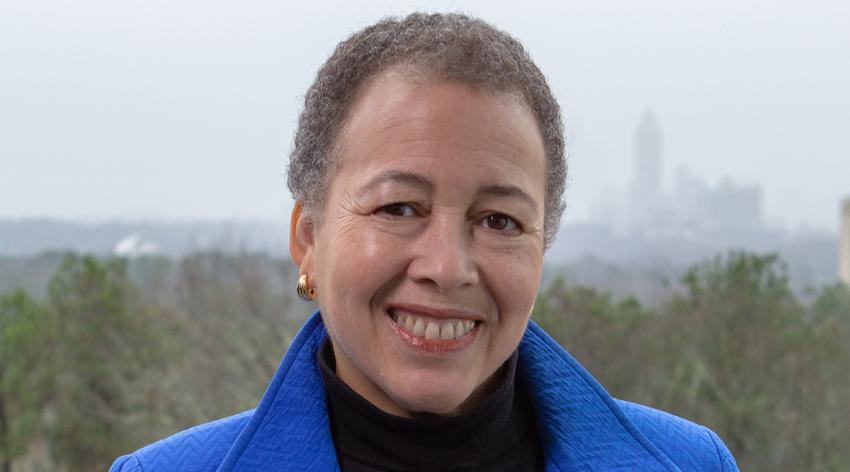
    As an academic medicine leader, Sola Aoun Bahous, MD, PhD, dean of the Lebanese American University Gilbert and Rose-Marie Chagoury School of Medicine, is accustomed to disruption.

    “Some disruptions challenge how we teach, like AI,” she says. “But other disruptions challenge whether we can teach at all, like the current war.”

    In the past decade, Aoun Bahous and her colleagues have faced numerous existential crises, from protests to COVID and the current bombardment. In the process, she and other leaders have created a blueprint for action that has stood them well, whatever forces they are contending with.

    “From the very first crisis, we learned to draft the proper questions: What is at stake? Who is affected? What must we protect, and what can we compromise on? And what do we do, and how do we do it?” Aoun Bahous says.

    The university prepared an emergency-response plan, based on the profound security, administrative, and logistical challenges the war posed, including the safety of students, residents, faculty, staff, and patients, along with more administrative issues such as maintaining faculty, resident, and staff salaries, Aoun Bahous adds.

    One surprisingly powerful tool was regular surveys for students, residents, fellows, faculty, and staff.

    “They really brought up a lot of good information that helped us move forward,” Aoun Bahous says. “These surveys were meant not only to check on our people, our community, but to see also who would be available should an emergency arise at the hospital, and to identify those who were displaced and whether they would need shelter or not.”

    To bolster the social and psychological well-being of students, trainees, faculty, and staff during the current crisis, university psychiatrists and psychologists began offering counseling sessions.

    “Care was the foundation of what we did and what we continue to do,” says Aoun Bahous.

    Weighing competing priorities

    To continue its fundamental mission, the medical school has had to balance the need for flexibility during the crisis against not compromising on foundational principles, such as core competencies, equity, and integrity, Aoun Bahous says.

    “We can be more flexible when it comes to things like the delivery modality [of instruction], to timing and scheduling, which we did,” she says. For example, “we identified all the students who are abroad, the students who are still in Lebanon, and those on elective rotations.” The school connected with institutions across borders to coordinate assessments and changed clinical placements for displaced students.

    The conflict also presented new opportunities to train students and treat patients, including with interprofessional education. The schools of medicine, pharmacy, and nursing have deployed a mobile clinic to tend people displaced by the attacks.

    “They come together in the mobile clinic to go and support the displaced — examine them, give them medical advice, offer them medications, and so on,” says Aoun Bahous. “It gives students a sense of purpose.”

    Such experiences reflect the school’s dual mission, Aoun Bahous says. “It’s how we support students for the sake of the patient.”