Since GLP-1 weight-loss medications exploded in popularity a few years ago, Chitra Ganta, MD, a geriatrician at the Cleveland Clinic, has seen a flood of interest from her patients.
She had already witnessed the positive effect of these medications on diabetes management in the years prior to their approval for weight loss and was excited to be able to offer them to her patients who have struggled for years with obesity.
“Once the GLP-1s came out, they truly helped so many patients with metabolic disorders, especially diabetes and obesity, become healthier and improved the quality of their lives,” Ganta says. “People come to you looking for help. It’s given me a lot more satisfaction as a physician to be able to offer them hope through these medications.”
This is significant, as the obesity epidemic has continued to rise. Nearly 40% of adults age 60 and older qualified as obese in 2023, according to the Centers for Disease Control and Prevention. Obesity and excess fat can have serious health effects across the lifespan, but particularly as people age.
Obesity is associated with increased risk for cardiovascular disease, metabolic disorders, respiratory problems, gastrointestinal disorders, endocrine disorders, and several types of cancers. It can also restrict a person’s activity and mobility, which in turn can exacerbate problems that tend to diminish health and quality of life in older adults — problems such as social isolation, depression, and muscle loss, known as sarcopenia.
The GLP-1 medications’ effects may go beyond diabetes and obesity treatment. Emerging data suggest that they may improve health across a range of diseases, including heart disease, addiction, some kinds of cancers, and dementia.
Ganta says she considers her patients’ specific health profiles before prescribing GLP-1s, especially with older adults who have frailty, dementia, or another geriatric syndrome.
“In older adults there is an association between weight loss and all-cause mortality, especially in men who lose more than 10% of body weight,” Ganta says. “So with patients 65 and older, I am more cautious with the medication. I assess the appropriateness of the medication carefully and monitor closely when [these patients] are on a GLP-1 agonist.”
The caution is warranted, according to John Batsis, MD, an associate professor of medicine in the Division of Geriatric Medicine at the University of North Carolina at Chapel Hill School of Medicine, particularly because of the lack of clinical data on the specific impact of GLP-1 medications on older adults.
“We don’t have data to be able to back up what we’re doing clinically,” Batsis says. “As clinicians, we like solid evidence-based [interventions].”
Working holistically
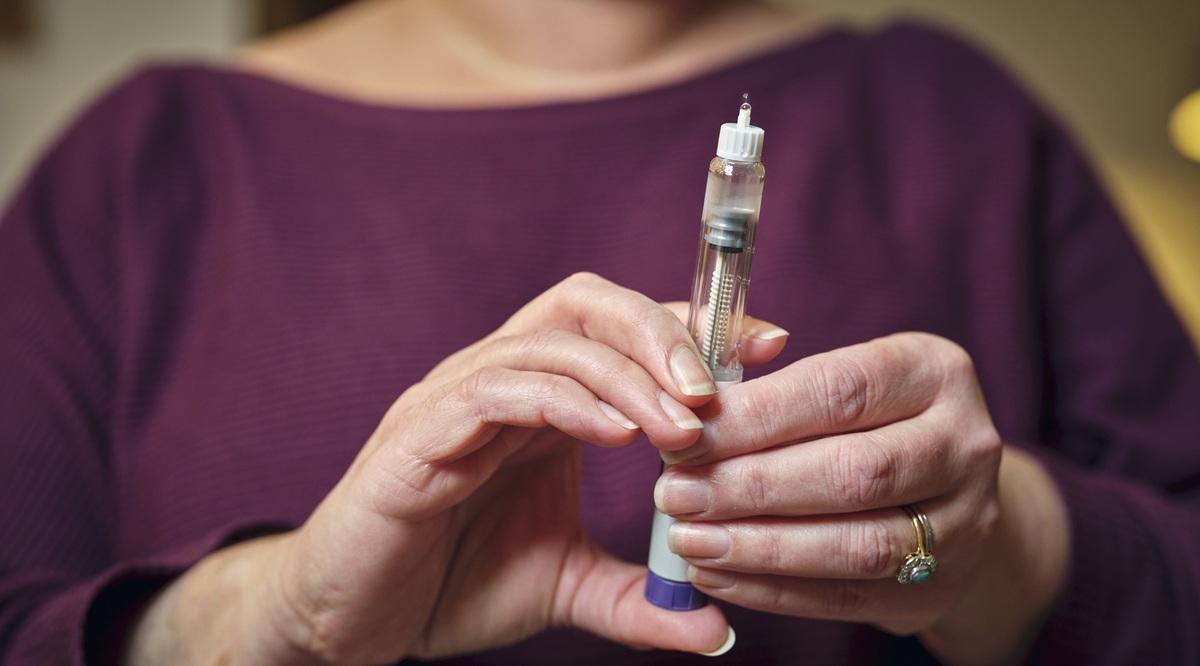
GLP-1 agonists, which are more commonly known by popular brand names, Ozempic and Wegovy, are injectable medications that mimic glucagon-like peptide-1, a natural hormone secreted in response to food intake that slows digestion and gives the brain satiety signals. There are also GLP-1 receptors in the pancreas, heart, kidneys, and lungs.
The emerging data on the broad effects of GLP-1 medications may support a more holistic approach to treating diseases that tend to exacerbate with age.
A single cause for dementia, for example, which could be targeted for prevention and treatment, has long eluded researchers. More recent studies have reported that complex factors, such as infection, environmental exposures, diabetes and metabolic disorders, and genetics, may all contribute to dementia risk.
With their cross-biological-system effects, GLP-1s may prove helpful in reducing the impact of some of these factors.
One literature review published in JAMA in April 2025 by a group of Irish researchers stated that “GLP-1 drugs are known to reduce inflammation, improve insulin signaling, and promote neurogenesis, all of which could protect against cognitive decline.”
These potential benefits could also have an effect on cancer outcomes.
A group of researchers, including oncologists and data scientists, from the University of Florida and Indiana University hypothesized that GLP-1s hold promise in oncology “due to their ability to lower glucose, adiposity, insulin resistance, and systemic inflammation — factors associated with cancer progression,” according to a July 2025 paper published in JAMA.
The researchers analyzed thousands of electronic medical records of older adults with both diabetes and cancer and found that those who were taking GLP-1s had lower all-cause mortality than did those who were taking another type of diabetes medication, dipeptidyl peptidase 4 inhibitors (DPP-4i). There was no difference when GLP-1s were compared with a third class of diabetes medications known as sodium-glucose cotransporter 2 inhibitors (SGLT2i).
In a separate study, published in JAMA in August 2025, the same researchers found that, across ages, GLP-1s were associated with lower risk of some obesity-related cancers, such as endometrial, ovarian, and meningioma cancers, but with an increased risk of kidney cancer, and nonsignificant changes for several other cancers.
“We knew from previous research that being overweight and having excess body fat is a recognized risk factor for insulin resistance and type 2 diabetes, which complicate cancer therapy,” says Thomas George, MD, a professor of medicine and interim director of the University of Florida Health Cancer Institute in Gainesville and one of the study authors.
“The study came out of a curiosity we had, since we certainly are seeing a lot more patients in the clinic on these therapies who are effectively losing weight,” he says. “They are helping improve diabetic control, helping with weight loss, making people feel better and appear healthier. We had the question, ‘Would that translate in potentially impacting their cancer risks?’”
George adds that the study had several limitations and that the data showed that older adults on GLP-1s experienced fewer benefits against cancer than middle-aged and younger patients. But he remains optimistic about the promise of these drugs to reduce the risk of some cancers and believes the issue calls for further study. The group of researchers is now analyzing the data to see if those on GLP-1s who developed cancer have a significant difference in cancer outcomes compared with those with cancer but not taking a GLP-1.
“Maybe they get healthier with some weight loss, and there may be some secondary gains,” George says.
What is still unclear, he adds, is whether the GLP-1s were causal in reducing cancer risk.
“Is it because the drugs themselves prevent cancer, or did they help the patient be healthier, reduce inflammation, and have a less sedentary life?” he says. “It would be important to tease that out. If the drugs are directly both improving weight reduction and cancer reduction, then we need to double down.”
Ganta wonders the same thing about the drugs’ apparent positive effects on several conditions, from dementia to sleep apnea: “Is it that obesity is causing or contributing to the problem [and that weight loss is causing the improvement], or is the medication directly having an impact through a different mechanism?”
She hopes there will be more research to parse this out in the years to come.
Special considerations in older adults
Ruchi Gaba, MD, an associate professor of endocrinology at Baylor College of Medicine in Houston, says that she thinks about multiple factors before prescribing GLP-1s for her patients 65 and older.
She reviews the patient’s other medications and decides whether adding GLP-1s will do more harm than good. For example, since GLP-1s slow down digestion, she considers whether any of the patient’s medications could cause problems by remaining in the body for an extended period. Also, if the patient is on other medications that cause gastrointestinal issues or vomiting, she may decide not to add a GLP-1, which can exacerbate these side effects.
She also takes into account the patient’s lifestyle and goals, prioritizing function over a drop in the number on the scale.
“It’s not just weight loss,” Gaba says. “It’s about preserving strength and independence and quality of life.”
Batsis is also careful to consider different factors when working with older adults with obesity.
“The people I see in clinic, they care about getting out of a chair, playing with their grandchildren, not being admitted into a nursing home,” Batsis says.
Batsis is particularly concerned about the risks of sarcopenia, which can be a problem for people with excess fat as well as those who are thin and may appear frailer.
He has spent more than a decade evaluating sarcopenic obesity, a condition he says is underrecognized.
“When you superimpose patients with obesity but with low muscle mass and strength, they are at greater risk of adverse outcomes,” Batsis says.
But people are rarely screened for sarcopenia, since it requires measures of both body composition and physical function.
Batsis also cautions clinicians who work with older patients to be mindful that older adults account for a small fraction of clinical trial participants.
In a 2018 analysis of clinical trial data, several researchers working with Novo Nordisk, the drugmaker for Ozempic and Wegovy, found that the drugs were safe and effective in adults over age 65, but noted that older adults reported discontinuation due to gastrointestinal issues at a higher rate than younger participants did. The study also pointed out that only a small portion (less than 3%) of the participants were over age 75, and advised caution in prescribing for these populations.
But even as he calls for more robust data on long-term outcomes and safety in older adults, Batsis says that his skepticism regarding the benefits of these drugs has decreased over the past few years.
“Four or five years ago I was saying, ‘What are we doing?’” he notes. “[But now I realize] there are patients who would benefit from these medications.”
He emphasizes that, when prescribed in concert with other comprehensive lifestyle interventions, including physical therapy, resistance training, and healthy eating, GLP-1s can be promising, so long as clinicians proceed with caution.
His motto for dosing is “Start low, and go slow.”