The AAMC’s Impact: Leading and Serving Academic Medicine
For decades, the AAMC has proudly:
- Supported medical schools, academic health systems, and teaching hospitals in developing the physician workforce, caring for patients and communities, and advancing medical knowledge.
- Supported the mission-focused people who lead these institutions.
- Served as the national voice and advocate for academic medicine.
As a 501(c)(3), purpose-driven organization, we reinvest our revenue back into programs, products, and services that support the entire academic medicine community and the health of people everywhere.

Speaking and Advocating for Academic Medicine
The AAMC is the leading voice and advocate for medical schools, academic health systems and teaching hospitals, and academic societies.
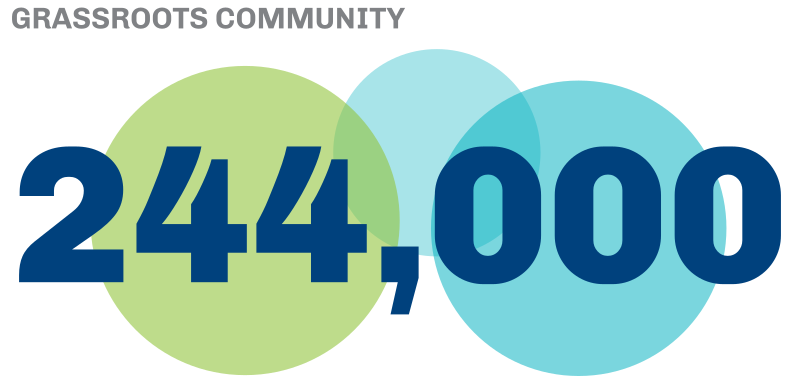
244,000 medical students, residents, researchers, faculty members, physicians, and others make up the AAMC-supported grassroots community calling for solutions to critical issues in academic medicine.

936 national, regional, and trade media outlets (print, online, and broadcast) cited the AAMC in 2025.
Throughout 237 congressional and executive branch meetings in 2025 — including 46 with members of Congress, senior congressional staff, and executive branch leaders — the AAMC represented the concerns and contributions of academic medicine.
Serving as the Professional Home for Academic Medicine
AAMC resources support purpose-driven careers in academic medicine through professional and leadership development, peer communities, and member engagement.
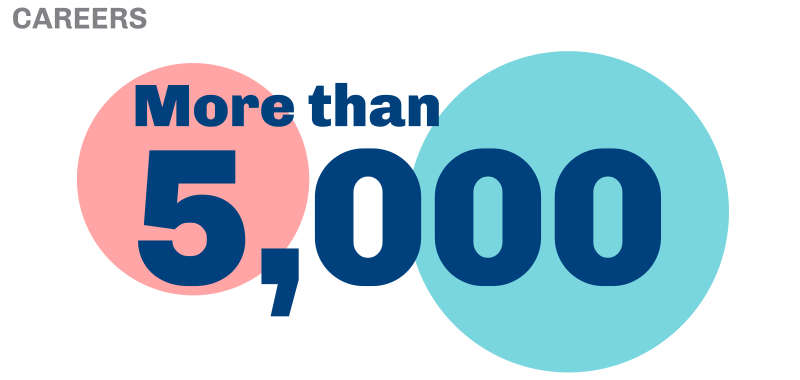
More than 5,000 job opportunities in academic medicine are posted each year on AAMC CareerConnect, along with career guidance for job seekers.
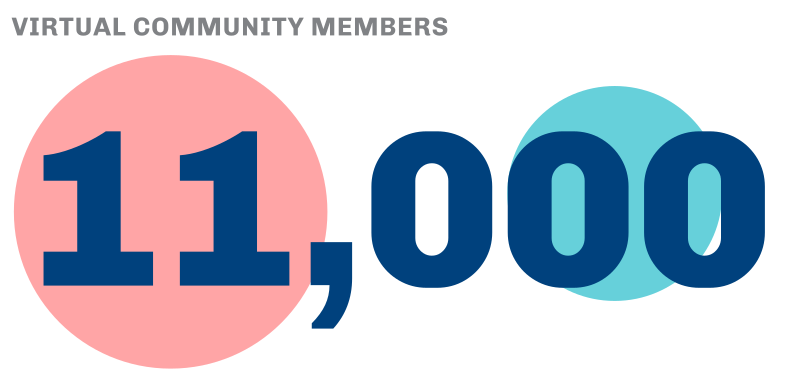
11,000 people are connecting with peers and sharing resources across nearly 100 AAMC Communities.
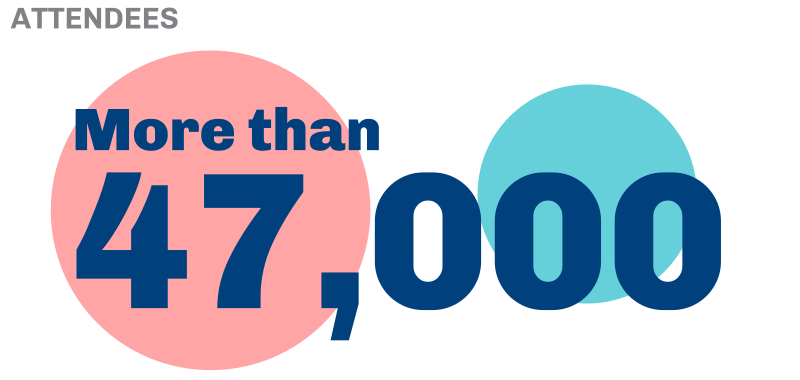
More than 47,000 people registered for at least one of the AAMC’s professional development workshops, conferences, and webinars in 2025, including the 3,600 attendees at Learn Serve Lead 2025: The AAMC Annual Meeting.

The AAMC developed three toolkits to help faculty, staff, learners, and leaders effectively convey the value of academic medicine and advocate for policies that strengthen the nation’s health.
Developing the Workforce of the Future
The AAMC supports aspiring medical students in their journeys to becoming doctors, providing the tools that institutions and educators need to select, educate, and train America’s medical workforce.
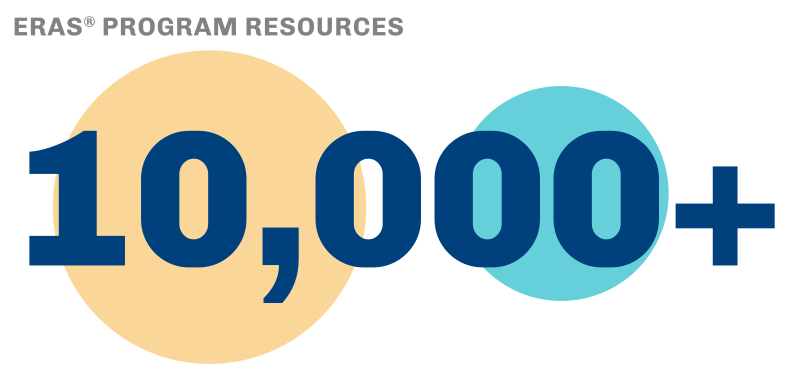
10,000+ residency and fellowship programs across more than 2,000 institutions used resources from the AAMC Electronic Residency Application Service® (ERAS®) and Thalamus during the 2025-26 residency recruitment season.
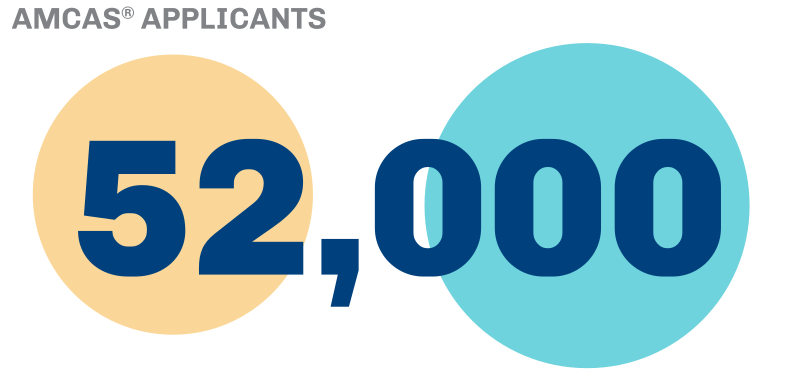
52,000 aspiring doctors apply to medical school each year through the AAMC AMCAS® program.
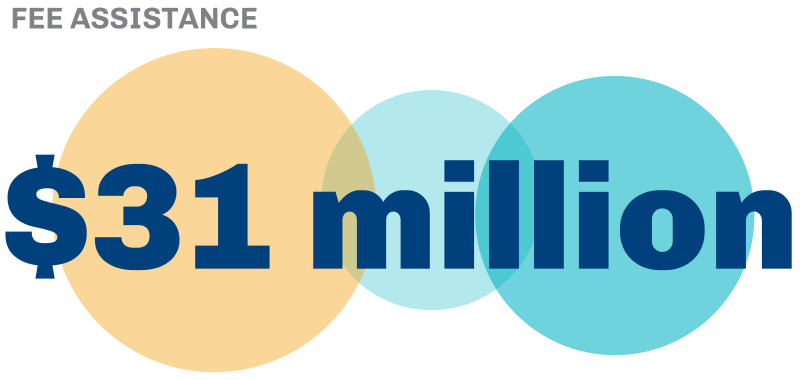
$31 million granted in reduced or waived fees to aspiring medical students in 2025 through the AAMC Fee Assistance Program.
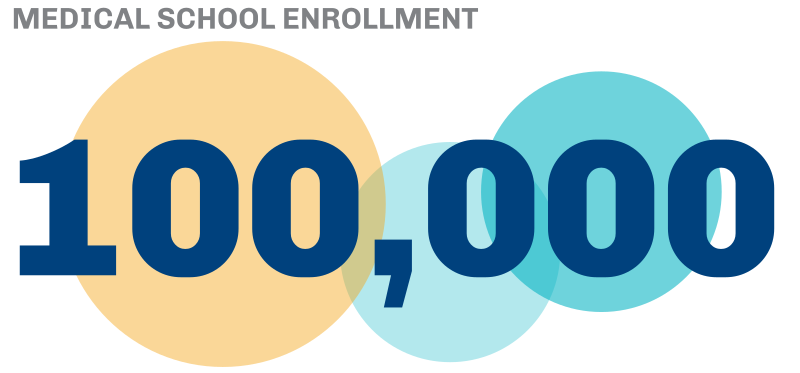
100,000 medical students were enrolled in 2025 — a record-high according to AAMC data — reflecting strong interest in medicine as a career.
Improving the Health of All
Biomedical researchers develop treatments and cures, and advance our knowledge of human health. Academic health systems and teaching hospitals make patient care safer, more affordable, and more accessible. The AAMC supports institutions in these lifesaving missions.
The AAMC Community Impact Tracker provides academic health systems and their community partners with one centralized tracking tool to increase resource efficiency, share progress transparently, and quantify the scope of work for reporting purposes.
The AAMC collaborated on a new framework to support academic health systems in building a physician enterprise that is aligned, agile, and prepared to meet a rapidly evolving health care environment.
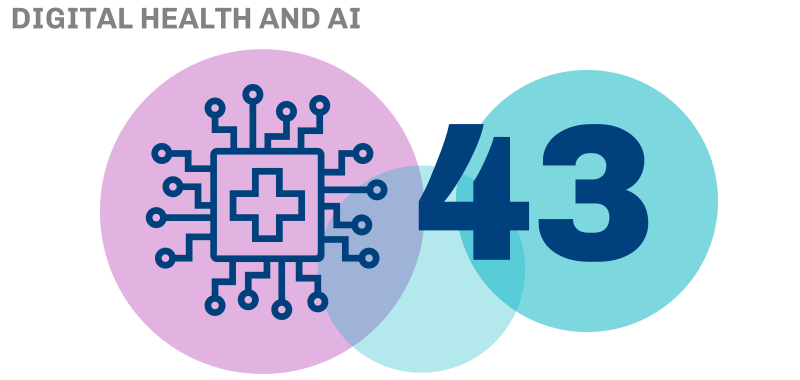
Leaders from 43 health systems convened to explore successful practices in digital health and artificial intelligence (AI) implementation through the Digital Health and AI Collaborative.
An AAMC analysis highlights critical health care access issues in rural communities, including physician shortages, financial challenges, hospital closures, and transportation barriers, and shares how AAMC-member institutions are implementing creative solutions.