Sometimes the path to medical school winds through another health care profession. In this year’s graduating class, one former marriage and family counselor always wanted to be a doctor but took another route when her college didn’t offer a premed major. Another chose optometry, only to realize that he wanted to treat the whole patient, not just the patient’s eyes. Yet another became an EMT, then met the woman who was to become his wife, herself a medical student, who encouraged him to pursue medical school. On Match Day, March 20, these students and about 40,000 others will find out where they will spend the next three to seven years of residency training. Here are their stories.
Laura Chan, 43
Oregon Health & Science University
Preventive Medicine
Previously: Pharmacist
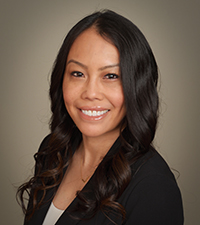
For as long as she can remember, Laura Chan dreamed of becoming a physician. Then she talked herself out of it.
The talk came when, as an undergraduate at the University of California, Davis, Chan went from being at the top of her class in high school to “competing with incredibly bright premed” classmates.
“I thought I wasn’t smart enough,” Chan says. “I got psyched out. I didn't even try, which always haunted me.”
Chan decided to follow her father’s career path into pharmacy, with a vision not so much to fill prescriptions as to improve health on a community level. She served as pharmacy director for a nonprofit organization in Honduras for nearly two years. There, she met challenges such as procuring and distributing medications from big cities to villages with low medical resources. She returned to the United States as an ambulatory-care clinical pharmacist, eventually helping to implement substance use disorder services in two health systems.
“I saw the need for more systemic, population-level changes” to improve health, she notes.
The urge to make a difference intensified while she was raising her daughter, now 12. “I wanted to instill the importance of following your dreams,” Chan says. “I don't want to spend my life thinking, ‘What if?’”
Her dream took her to medical school. Supporting that dream is her mother, who, through Chan’s medical school years, helped to raise Chan’s daughter and will follow them to residency. “We move as a unit,” Chan says of her family.
Ultimately, Chan sees herself as a public health officer for local and state health departments, while maintaining a clinical practice to stay grounded with the community. Her goal: “to work in and lead population-level projects” to improve community health and to promote whole-person care.
Christopher Combates, 32
Geisinger Commonwealth School of Medicine, Scranton, Pennsylvania
Internal Medicine
Previously: Army medic
The soldier was suffering from heatstroke and having a seizure when Christopher Combates, a medic in the 101st Airborne Division of the U.S. Army, got to him. “In my head, I was going, ‘OK — airway, breathing, circulation. I need to make sure that his neck is stabilized.’” The patient recovered.
Combates, just 19, had joined the Army in part to give himself options. “I thought I would join the military and then use the GI Bill when I figured out what I wanted to do,” he says.
He found himself at Germany’s Landstuhl Regional Medical Center and, after a short training period, was thrust into service.
“My experiences taught me clinical discipline, adaptability, and the importance of calm decision-making,” he says.
They also made him realize that he wanted to do something in medicine. “That really gave my life a sense of purpose and direction,” he adds. “I just had a passion for it.”
Initially he explored becoming a physician assistant (PA) but ultimately decided that the physician role aligned better with his goals.
First, though, he had to get his bachelor’s degree. The first one in his family to go to college, he earned a degree in psychological sciences and biochemistry from the University of Arizona while also working as a clinical research coordinator.
“I was doing research on renal cell carcinoma and urology,” he says. “That put me in a really good place to apply to medical school.”
Combates believes that his military training has served him well during his medical education. In addition to instilling discipline and drive, the Army gave him other experiences that would benefit him as a doctor.
“You’re in charge of other soldiers and so learn responsibility early on,” he explains. “You’re working alongside physicians, PAs, and nurses, and you’re expected to be a competent member of the team.”
Combates has his sights set on internal medicine.
“You get to see all different types of pathologies,” he says. “And you have that continuity of care with patents where you can develop a long-term relationship with them and oversee their whole care.”
Jakara Hubbard, 40
University of Illinois College of Medicine, Chicago
Family Medicine
Previously: Marriage and family counselor
“It was just one of those random, late-night conversations” that turned life around for Jakara Hubbard.
Visiting her father at the family home in Illinois one night, Hubbard vented her frustrations over a series of clinical mental health counseling jobs that didn’t fulfill her and applying for more fitting counseling jobs that she didn’t get.
“I would love these jobs, and they didn’t love me, or they loved me and I didn’t love them,” Hubbard recalls. Her dad said, “‘You’re going to just keep bouncing around until you become a physician.’ I was really mad at him.”
Mad because becoming a physician had been her dream in high school. But after Hubbard accepted a scholarship at a university in her home state, she discovered that it did not offer a premed major. Believing that this precluded her from pursuing medical school, Hubbard earned a degree in sports management, then a master’s degree in counseling.
Through several clinical counseling jobs, Hubbard found that she “focused on a lot of the medical causes of changes in mood and mental health conditions.” But she then took on a managerial role, which left her cold.
“I missed working directly with people,” recalls Hubbard, then in her early 30s.
That’s when she talked with her father. His suggestion that she pursue her medical school dream seemed impossible to follow. “I had a car note. I had a mortgage. I was working full-time.”
After more conversations, Hubbard made the leap. She quit her job as a clinical manager in 2019, took science classes at a local university to meet the medical school application requirements, and financed medical school with part-time counseling work and help from her father.
Today Hubbard stands ready to start practicing family medicine — bringing her once again into direct contact with people in need.
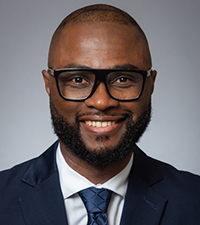
Ebuka “Cally” Eziama, 36
UT Southwestern Medical School, Dallas
Anesthesiology
Previously: Optometrist
At age 16, Ebuka “Cally” Eziama decided he wanted to be an optometrist. If that sounds young, it’s not unusual in Nigeria, where most students choose a career — and the corresponding professional school that will enable them to pursue that career — immediately after secondary school.
And so Eziama spent six years learning to conduct comprehensive eye examinations, diagnose vision problems, and prescribe corrective lenses. He then took a position at Eye Foundation Hospital in Lagos, one of the largest specialty eye hospitals in West Africa, dedicated to eliminating preventable blindness and improving eye health for all.
It was rewarding work, and Eziama relished the opportunity to care for patients. He also volunteered for medical outreach programs in several remote Nigerian villages, and even established a start-up, LGY Optics, to help patients gain access to specialty lenses that were unavailable from local manufacturers. Before he intervened, his “patients would just settle for what they could get,” he recalls. “It could take weeks or months to get the product, at a crazy price, and it might not be exactly what they needed.”
Eziama sent out loads of emails to specialty-lens manufacturers, many of whom agreed to partner with the hospital to get lenses for patients in days, not weeks, and at “a good enough price.” The result? High-quality lenses in patients’ exact prescriptions.
But Eziama wasn’t satisfied. He wanted to be able to diagnose and treat more complex eye disorders. And so began the path to medical school. With a pharmacist sister in the United States, Eziama moved here in 2017, taking premedical classes at Collin and Dallas community colleges and the University of North Texas, all while working as an ophthalmology tech at UT Southwestern and applying to medical school.
While becoming an ophthalmologist was the goal at the start of medical school, Eziama soon discovered that he wanted to care not just for the eyes, but for the whole patient. “Anesthesiology checked a lot of boxes for me,” he says.
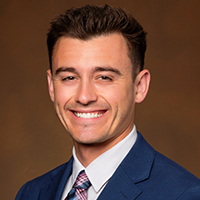
Jakob Weiss, 27
University of Wisconsin School of Medicine and Public Health
Psychiatry
Previously: Mental health counselor
Growing up in a small, rural farm town in Wisconsin — there was even a Drive Your Tractor to School Day — Jakob Weiss was raised with a deep respect for education, service, and community.
His mother, an elementary school special education teacher, not infrequently brought students to live with the family for a bit, when their own home situations were untenable. His father, a high school social studies teacher, also coached football, basketball, and baseball, inspiring kids to test their limits both on and off the field or court.
Even more impactful, though, was that Weiss’ younger sister, Emily, lives with Ehlers-Danlos syndrome, a genetic disorder that can result in joint dislocations, chronic pain, and frequent bruising.
“Growing up, we were in and out of hospitals and clinics nonstop, and I really appreciated all of the physicians who worked with her, and I could see the immense trust that she and my parents placed in the health care system and the providers that helped us out,” Weiss says. “So, that really inspired me, from a young age, to pursue medicine.”
After graduating early from the University of Minnesota with a bachelor’s degree in psychology — in addition to completing all his premed courses — Weiss then took a gap year to work as a mental health counselor before applying to medical school.
“Minnesota has a pretty cool community mental health system called IRTS — intensive residential treatment services — that serves as a bridge between inpatient hospitalization and being able to function on your own in society,” he says. Part of his job was to counsel patients, but he also accompanied them to outpatient psychiatry appointments and connected them with community services and employment support.
“I remember accompanying patients to their psychiatry appointments and thinking, ‘This is exactly what I want to do. I can’t wait for that day.’”
Weiss will be one step closer to that day on Friday, when he finds out where he matched into a psychiatry residency. He is part of the Couples Match® — his fiancée, Lauren Priem, is matching into family medicine.
“At IRTS, I got to work with patients for 90 days of the program, but as a psychiatrist, I could work with patients for 20 or 30 years,” he says. “I find that really enticing.”
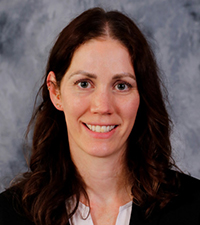
Katherine Morrison, 38
University of Missouri School of Medicine
Pediatrics
Previously: Physical therapist
Katherine Morrison first started thinking about a career in medicine when she was a freshman undergraduate.
“However, I talked myself out of it,” she says. “I’d already been accepted to a fast-track physical therapy program and was set to finish undergraduate and PT school in five and a half years. I thought medical school would take too long, be too expensive, and that I wasn’t smart enough.”
Her career as a physical therapist took her into almost every care setting — from an acute rehabilitation unit to a private outpatient clinic. Her last job before medical school was at the hospital in her hometown of Ames, Iowa, where she rotated to different floors — oncology, orthopedics, the emergency room, and same-day surgery.
Although she enjoyed her work, the idea of medicine kept resurfacing. “At least once a year I’d think, ‘What if I went to medical school?’”
The COVID-19 pandemic was clarifying. By then, Morrison was raising three small children: a son (now 9) and twin daughters (now 7).
“I thought, ‘I’ve just made it through the pandemic working in a hospital, having the kids, and I’m still managing all of this,’” she says. “‘Maybe I should just take the prerequisites.’”
Morrison applied to medical school and has never looked back. She says her previous career has been invaluable during her physician training, “from the most basic thing of just how to talk and interact with people — the communication piece — to the documentation piece.” Her knowledge base in neurological and musculoskeletal conditions has also given her a leg up.
Her children have been a big part of her medical school experience, she adds. Their input even helped her decide on her future specialty: pediatrics.
“Last year, within the first few days or weeks of a new rotation, they’d go, ‘Mom, you’re really grumpy, please don’t do this,’” says Morrison. “Then when I was on pediatrics, every single day for the seven weeks, they’d say, ‘Mom, you’re super happy.’ They were right.”
Her advice to others contemplating medicine after work in another health field: “Stop doubting yourself and just do it!”
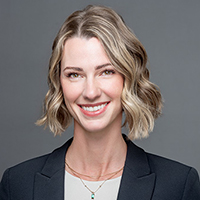
Jennifer Nedimyer Horner, 34
University of Central Florida College of Medicine
Diagnostic Radiology
Previously: Medical-office assistant
Jennifer Nedimyer Horner wasn’t initially drawn to medicine. In college she studied English literature and started her career as a copy editor and proofreader. To supplement her income, she took a part-time job working in medical billing. But what started as a way to make extra money turned into a curiosity about the medical field. After working in a medical office for several years, Horner decided she wanted to apply to medical school.
Growing up in the Florida Keys, Horner remembers her parents joking about what they wanted to be when they “grew up.” She thinks that this example helped her take the risk of going back to school and making a career change in her 30s.
“There’s no growing up,” she says. “You can constantly pursue growth and education.”
Her medical school experience was complicated by the fact that she gave birth to her two daughters while she was a student. Her older daughter was born in 2020 and, because of the challenges that the COVID pandemic brought, Horner decided to take a year away from school between her first and second years. Then her younger daughter was born with health issues that required Horner to take another two years away after her second year.
During that time, she was still immersed in medical system while navigating her younger daughter’s care. This experience led her to appreciate the people behind the scenes who helped arrive at a diagnosis. It also reinforced her career decision.
“Having had someone I care about deeply needing medical care, it just made me able to empathize with patients in a way that I’d never been able to do before,” she says. “I felt like this was absolutely the right track for me. I’m in the right place.”
Horner is hoping to match into diagnostic radiology, a specialty where she can give patients answers about their medical conditions.
At her Match Day celebrations, Horner will have her daughters, now 5 and 3 years old, announce her Match results.
After all, they’ve motivated her to keep going. She wants to be an example to them of what is possible.
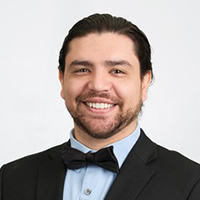
David Ceraolo, 33
Northeast Ohio Medical University
Emergency Medicine
Previously: Emergency medical technician
One day when David Ceraolo’s dad was driving him to school, he suddenly pulled the car over and told his son to get out and walk the rest of the way.
When Ceraolo protested, his dad’s response was urgent.
“I’m having a heart attack!”
He drove himself to a nearby emergency room, where the doctors saved his life from a blockage in the left anterior descending artery, a condition commonly referred to as a widow-maker.
Ceraolo recalls how helpless he felt as his dad drove away and how much he hated that feeling.
But growing up on a ranch with his six siblings near San Jose, California, Ceraolo had no doctors in his family or social circle. Medical school wasn’t on his radar. Though he loved biology, his academic approach to high school was “C’s get degrees.”
Then, while he was attending community college, he took a job as an emergency medical technician (EMT).
“I absolutely loved it,” he says. “You see so many different walks of life, whether it’s the poor, the rich, everything in between.”
He transferred to the University of San Francisco, where he met the woman he would later marry.
In fact, it was his wife who inspired him to take the step from EMT to medical school. He moved to Ohio with her, where she attended Northeast Ohio Medical University. He applied through a pathway program in Cleveland and started medical school when his wife was in her fourth year.
She’s now completing her final year of her emergency medicine residency at Akron General hospital. And on Match Day, with as many of his family members as can come in from California there to celebrate with him, Ceraolo hopes to join her as an emergency medicine physician in the Cleveland area.
This summer will be a big one for the Ceraolo family. They’re expecting their first child in July.