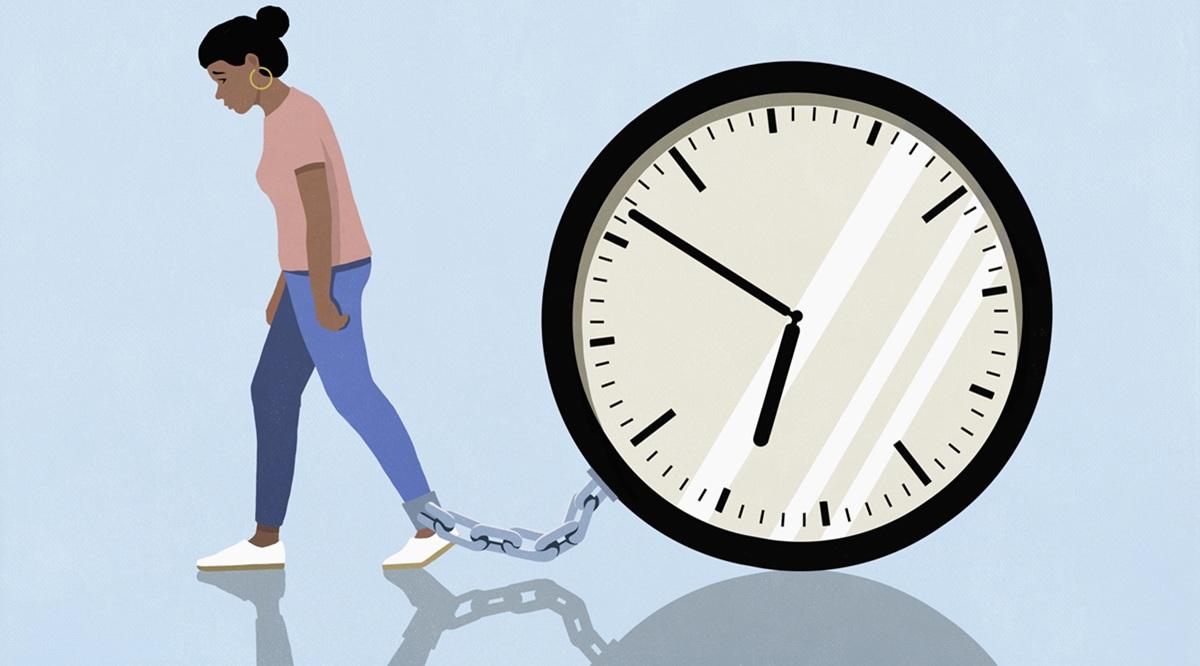
Americans disagree about a lot of things. But there’s one complaint that may unite them all: the chaos of changing the clocks twice a year.
As the country prepares to return to standard time this fall, recent congressional action is raising questions about the biannual shift. In July 2026 the U.S. House of Representatives voted in favor of the Sunshine Protection Act of 2025, which would make daylight saving time permanent. The bill is now before the Senate. Competing legislation, called the Sunshine for Our Kids Act of 2026, which was introduced in the House this past July, would make standard time the year-round default, while allowing states to choose daylight saving time. That measure remains in a House committee.
Advocates of year-round daylight saving time point to longer, brighter evenings, including more daylight for participating in sports and fitness activities, as well as greater economic opportunities. Business interests, such as golf courses and outside malls, are among the proponents.
Sleep scientists generally favor permanent standard time, arguing that morning sunlight is essential to keeping the body’s internal clocks in sync and promoting health. Indeed, research suggests that the timing of daylight may influence sleep, cardiovascular health, metabolism, and even the risk of traffic accidents, according to Karin Johnson, MD, a professor of neurology at UMass Chan Medical School – Baystate and division chief of Baystate Health Regional Sleep Medicine in Springfield, Massachusetts. She is also a leading advocate for permanent standard time.
How did we get here?
For millennia, citizens set their schedules by the sun’s position in the sky. In the 19th and early 20th centuries, “you had a local clock tower, and at high noon, when the sun was in the middle of the sky, it would ring 12, and that was 12 o’clock,” says Jamie M. Zeitzer, PhD, a professor (research) of psychiatry and behavioral sciences (sleep medicine), and codirector of the Center for Sleep and Circadian Sciences at Stanford Medicine, in Stanford, California.
Myths about the beginnings and purpose of daylight saving time abound. Benjamin Franklin is said to have mused on the potential of the concept to enhance productivity. Many people wrongly believe daylight saving originated to aid farmers. But in fact it was introduced in the United States during World War I and then again during World War II, as part of the war effort.
“They thought it would basically force people to go to work an hour earlier, so we’d get more work out of them, and potentially save energy and money,” Johnson says.
After World War II, however, inconsistent times between the states and challenges with railroad scheduling eventually led to the Uniform Time Act of 1966, which instituted daylight saving time from the last Sunday in April to the last Sunday in October. (Hawaii and Arizona opted out and observe standard time year-round.)
The United States tried year-round daylight saving time in 1974 during the energy crisis. But it was quickly abandoned after several traffic fatalities involving children going to school on dark winter mornings soured the public on the policy, according to Beth A. Malow, MD, MS, a professor of neurology and pediatrics at the Vanderbilt Sleep Disorders Division at Vanderbilt University Medical Center, in Nashville, Tennessee. Subsequently, daylight saving time was lengthened and now runs from the first Sunday in March to the first Sunday in November.
Public opinion polls show that changing the clock twice a year is unpopular. Some surveys show support for permanent daylight saving time, while others indicate a preference for permanent standard time. Regardless of how people feel about the twice-yearly clock changes, however, research shows it comes with significant health impacts.
Spring forward
The spring transition — moving the clock ahead one hour — is the most difficult, experts note. Individuals experience immediate sleep loss, with its attendant tiredness, and also report poorer sleep quality for up to two weeks after changing the clock, says Johnson. The effect is a slump in energy and performance, as people adjust their sleep schedules.
“It affects everything from grades at school to marathon running times, and increases in car crashes,” she adds.
Cardiovascular events are more likely during both the spring and the fall transitions. The incidence of stroke rises sharply the first two days after the switch, particularly among older adults and in people with cancer, research shows. Other data find an increase in heart attacks and a rise in atrial fibrillation for as many as four days after the spring shift.
But negative effects extend beyond the few days after the time change. The problem, researchers say, is that our internal biological clocks don’t necessarily adjust when people move the hands of a clock forward. Instead, daylight saving time can put humans’ daily schedules at odds with the natural rhythms that regulate sleep, alertness, hormones, and metabolic and other body functions.
“Our body is still saying, ‘Go to bed at this time, wake up at this time,’” Johnson says. “But your social schedule is saying, ‘Nope, you’ve got to get up an hour earlier to go to work.’”
Adds Malow: “Light in the morning makes it easier to go to sleep at night and get a normal night’s sleep, which baffles a lot of people. The way I explain it is, you’re aligning your biological clock, your circadian rhythms, with the outside world.”
The change from standard time to daylight saving and vice versa may be harder on some people than others, including shift workers and those who need to report to work in the early morning hours, including students, health care professionals, police, and firefighters, Malow notes.
Adolescents, who have a natural delay in their circadian rhythm until around age 20, also shoulder a greater burden, according to Johnson.
“The average teenager wants to stay in bed in the morning and sleep in late,” she says. “[During daylight saving time] they start school an hour earlier compared to their body clock, and you give them bright light at night, so they go, ‘I’m wide awake. I can’t settle down and fall asleep.’ It’s not surprising that 75% of adolescents are sleep deprived.”
Finding your rhythm
The mismatch between daylight and body clocks during daylight saving time is called circadian misalignment, and scientists say it may be responsible for a host of negative health consequences. Later sunrises and sunsets have been linked to increased cancer rates, obesity, heart attacks, diabetes, and suicide.
These findings are based in part on studies involving people living on the western edges of time zones, who experience later sunrises by the clock than people on the eastern edges. The geographic differences serve as a proxy for understanding the effects of circadian misalignment during daylight saving time.
“If you’re on the eastern edge in the time zone, your sun is closer to overhead at noon,” says Johnson. “If you’re on the western edge, your sun is more overhead at 1 o’clock, which is essentially the sort of hour difference that we would get with daylight saving time.”
Permanent daylight saving time would subject people to circadian misalignment for a full 12 months, sleep scientists assert. In fact research shows that people living on the western edges of time zones get less sleep on average and also have a greater risk for obesity, heart disease, diabetes, and breast cancer.
In other research, Zeitzer’s team examined county-level data across the United States, using Centers for Disease Control and Prevention information on disease incidence and a mathematical model of circadian rhythms to predict the health outcomes of different time policies. In line with other data, the study projected that permanent standard time was the best time policy for health.
And while proponents of daylight saving time argue that extended light in the late afternoon would promote physical activity, evidence suggests the opposite. An Australian study conducted before and after the introduction of daylight saving time found that many adults shifted their exercise from the morning to the afternoon. However, there was an overall reduction in the number of hours they spent exercising.
There’s a wide consensus among professional medical organizations, including the American Academy of Neurology, the American Academy of Sleep Medicine, the American Medical Association, and the Sleep Research Society, that permanent standard time would be the healthiest time policy for Americans to follow. From there, continuing to switch the time twice a year is generally seen as the lesser of two evils. And permanent daylight saving time is deemed the worst possible scenario from a health perspective.
Making a smoother time transition
Until Congress decides to enact a policy that ends the biannual time shift, Americans will continue to put up with the challenges. Although the fall transition is usually easier to adjust to, it’s not trouble-free, Malow says. Earlier darkness can produce afternoon fatigue and encourage habits that interfere with sleep.
Experts recommend the following steps to adjust to either time transition:
- Get plenty of rest before the clock changes. “The number one most important thing, whether it’s March or November, is to try not to go into the transition sleep deprived,” Malow says.
- Shift your bedtime by 15 minutes each night for four days before the clock change. Attempting to shift bedtime by a full hour all at once can itself disrupt sleep, says Zeitzer. A gradual adjustment can make the transition less abrupt, particularly in the spring.
- Seek bright morning light to help synchronize circadian rhythms. That’s always a good idea, but especially important during the time transition, Malow says.
- Exercise regularly, avoid excessive alcohol and late-day caffeine, and be especially attentive to driving safety when morning or evening commutes become darker, she adds.
- Don’t overthink it. Some people get anxious about the time shift, Zeitzer says, particularly in the spring. Keep in mind, “there are many other days where you lose an hour of sleep,” he says. “You will adjust.”