
A famed geneticist who was the first to identify the ε4 variant of the APOE gene as a major risk factor for Alzheimer’s disease. A former president of the National Academy of Medicine, whose leadership greatly enhanced the organization’s role as a trusted authority in addressing global health challenges, including during the COVID-19 pandemic. A physician-scientist whose research and congressional testimony, as the Affordable Care Act was being drafted in 2009, advanced the clinical and policy rationale for expanding insurance coverage to more than 20 million Americans. These are among the recipients of the 2026 AAMC Presidential Awards, which recognize individuals and institutions that have made lasting contributions in medical education, research, clinical care, and community engagement.
Jonathan L. Haines, PhD: 2026 Award for Distinguished Research in the Biomedical Sciences
At the start of Jonathan L. Haines’ career, in the mid-1980s, science was just starting to unravel the human genome and genetic associations were known for only a handful of diseases. Since that time, Dr. Haines, a revered researcher at Case Western Reserve University School of Medicine (CWRU SOM), in Cleveland, has significantly expanded our understanding of the relationship between genetic variation and disease risk. His most heralded contribution, a paper in Science that identified the ε4 variant of the apolipoprotein E (APOE) gene as a major risk factor for late-onset Alzheimer’s, revolutionized research into the disease. But Dr. Haines has also made major contributions to science’s understanding of multiple sclerosis, Parkinson’s disease, macular degeneration, and other ailments. Across his 800 publications, he has identified more than 20 causal and 500 associated loci for various diseases. He has also identified the specific triggers for at least 40 diseases that can arise as the result of a mutation in a single gene. In 1997, Dr. Haines founded the Center for Human Genetics Research (now the Vanderbilt Genetics Institute) at Vanderbilt University, in Nashville, Tennessee. In 2013, he moved to CWRU SOM, where he now chairs the Department of Population and Quantitative Health Sciences and directs the Cleveland Institute for Computational Biology.
John Z. Ayanian, MD, MPP: 2026 Robert Wood Johnson Foundation David E. Rogers Award
Over his 30-plus-year career, John Z. Ayanian, MD, MPP, inaugural director of the Institute for Healthcare Policy and Innovation at the University of Michigan, has systematically documented racial, ethnic, socioeconomic, and gender disparities in health outcomes. His contributions began in 1991 with the publication of a paper in the New England Journal of Medicine (NEJM) demonstrating that men were more likely than women to receive interventional procedures after a heart attack. Two subsequent NEJM papers showed that Black patients with kidney failure were significantly less likely than white patients to be referred to a transplantation center. His research informed the groundbreaking 2003 Institute of Medicine (IOM) report Unequal Treatment: Confronting Racial and Ethnic Disparities in Health Care, which helped galvanize national attention around disparities in health care and stimulated policy and practice efforts aimed at reducing them. Between 2000 and 2009, Dr. Ayanian was a key member of two IOM committees that issued seven reports on the consequences of the lack of insurance for individuals, families, communities, and the nation. His congressional testimony about these reports, as the Affordable Care Act was being drafted in 2009, advanced the clinical and policy rationale for expanding insurance coverage to more than 20 million Americans.
Mary Woolley, MA: 2026 Special Recognition Award
During her 35-year career at the helm of Research!America, Mary Woolley played a pivotal role in elevating research and innovation, and was instrumental in fostering bipartisan support for biomedical research. Her efforts advanced sustained federal investments in science and helped Research!America cultivate strong, cross-sector partnerships among scientists, academic medicine leaders, patient advocates, industry leaders, policymakers, and the public. Under Ms. Woolley’s leadership, Research!America frequently collaborated with the AAMC to advocate for increased federal funding to strengthen federal research and health agencies, including the National Institutes of Health, the Agency for Healthcare Research and Quality, and the Centers for Disease Control and Prevention. With a keen instinct for shaping public awareness, Ms. Woolley made Research!America a trusted source for public opinion polling, advocacy materials, and high-profile events addressing some of the most pressing issues for the academic medicine community. In addition to her work with Research!America, Ms. Woolley has held leadership positions in national organizations, including serving on the National Academies of Sciences, Engineering, and Medicine Board on Life Sciences and its Board for Higher Education and Workforce. She retired from Research!America in June 2026.
Victor J. Dzau, MD: 2026 Special Recognition Award
Over his illustrious, four-decade-long career as a physician-scientist and leader in academic medicine, Victor J. Dzau, MD, has helped shape the institutions, policies, and partnerships advancing health around the world. In July 2026, Dr. Dzau completed a 12-year tenure as president of the prestigious National Academy of Medicine (NAM), during which he strengthened its role as a trusted authority and catalyst for addressing some of the world’s most pressing health challenges. Under his leadership, the NAM advanced its work in areas such as global health equity, clinician well-being, health care transformation, climate and health, and preparedness for emergency health threats. This included collaborations with many organizations, the AAMC among them. During the COVID-19 pandemic, Dr. Dzau was instrumental in initiating international responses to develop diagnostics, treatments, and a vaccine. He is also a distinguished biomedical researcher and institutional leader. At Duke University, where he serves as chancellor emeritus for health affairs, he expanded the university’s research and education mission by creating new institutes focused on translational medicine, global health, and health innovation. In addition, he led the creation of a joint medical school with the National University of Singapore, extending his influence and impact on medical education internationally.
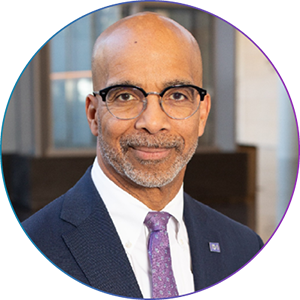
Clyde W. Yancy, MD, MSc: 2026 Herbert W. Nickens Award
As the grandson of sharecroppers and the great-great-grandson of enslaved people, Clyde W. Yancy, MD, MSc, chief of cardiology at Northwestern University Feinberg School of Medicine (Feinberg), in Chicago, frequently cites his humble beginnings as the foundation for his life’s work as an equity-minded cardiologist, researcher, mentor, and educator. Despite numerous barriers, he entered Tulane University School of Medicine at age 20 and graduated near the top of his class in 1982. Following his internal medicine training at Parkland Memorial Hospital (now Parkland Health), in Dallas, he completed a cardiovascular fellowship at the University of Texas Southwestern Medical Center. Dr. Yancy joined the faculty there in 1989, rising to associate dean for clinical affairs while also leading the heart failure and transplant program. He concurrently conducted pioneering research in heart failure and transplantation, heart disease in African Americans, and health disparities. In 2011, Dr. Yancy was recruited to lead the Division of Cardiology at Feinberg and co-lead the Bluhm Cardiovascular Institute at Northwestern Medicine. In 2015, he was named a vice dean and now leads Feinberg’s Office of Health Equity. During his tenure, the number of underrepresented in medicine (URM) faculty has doubled, and URM representation in residency programs has tripled, to 31%.
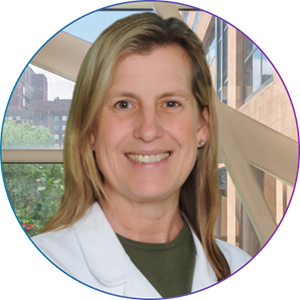
Lara Carson Weinstein, MD, MPH, DrPH: 2026 Arnold P. Gold Foundation Humanism in Medicine Award
As a family physician, addiction medicine specialist, and public health researcher in the Department of Family and Community Medicine at the Sidney Kimmel Medical College (SKMC) at Thomas Jefferson University, Lara Carson Weinstein, MD, MPH, DrPH, has built a distinguished career supporting the most vulnerable patients in her hometown of Philadelphia. While a pre-clerkship medical student at Jefferson Medical College (now SKMC), Dr. Weinstein helped establish JeffHOPE, a network of student-run medical clinics providing acute care and connecting individuals with the long-term resources needed for improved health outcomes. She later led the development of the Pathways to Housing PA Integrated Care Clinic, the region’s first embedded primary care program for individuals living in Pathways supportive housing who have histories of chronic homelessness and psychiatric disability. She also leads the Stephen and Sandra Sheller Consult and Bridge Program, a first-in-Philadelphia initiative that seamlessly coordinates acute hospital treatment, outpatient substance use disorder treatment, primary care, and social services. Across these initiatives, Dr. Weinstein consistently meets patients in their own environments, providing them with treatment without discrimination, and addressing their individual physical, emotional, and social needs.
Learn more about Dr. Weinstein
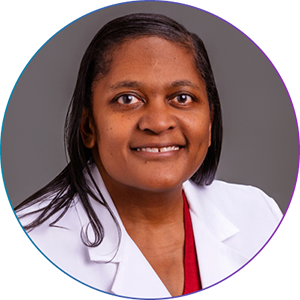
Laine Young-Walker, MD: 2026 Louis W. Sullivan, MD, Award
As a physician leader in academic medicine, Laine Young-Walker, MD, chair of the Department of Psychiatry at the University of Missouri – Columbia School of Medicine, has had an outsize impact on expanding opportunities at the school for historically underrepresented populations. She’s done this while making significant contributions to the mental health of children and adolescents in communities across Missouri. As principal investigator, responsible for more than $25 million in federal and state grants, Dr. Young-Walker has translated her vision for improved access and care for youth mental health into evidence-based action targeting rural families, children in foster care, youth in the juvenile justice system, and mothers navigating perinatal mental health challenges. She also launched the Center for Child Well-Being, which is home to 10 interventional programs that support parents, professionals, and community organizations in fostering the mental health and well-being of children. In addition to her clinical work, Dr. Young-Walker served as associate dean for student affairs from 2016 to 2024. In that capacity, she led admissions reforms that resulted, in 2022, in the school matriculating its most academically accomplished class.
Learn more about Dr. Young-Walker

University of Hawaiʻi John A. Burns School of Medicine: 2026 Spencer Foreman Award for Outstanding Community Engagement
At the University of Hawaiʻi John A. Burns School of Medicine (JABSOM), community engagement is embedded within the institution’s mission, fostering partnerships in which communities are the recipients of the work and active collaborators in it. That partnership begins with medical education. All first-year students participate in a longitudinal community health course developed in collaboration with local organizations. Its Rural Health Program provides further experiential learning opportunities throughout all four years of medical school, on Kauaʻi, Maui, Lānaʻi, and the Big Island, preparing students who are interested in serving communities where physician shortages and barriers to care are most pronounced. Community partnership is equally central to JABSOM’s research mission. Since 2005, the PILI ʻOhana Project (Partnerships to Improve Lifestyle Interventions) has engaged Native Hawaiian and Pacific Islander organizations as collaborators and coinvestigators in addressing chronic disease and health disparities. By combining the resources of academic medicine with the knowledge, culture, and expertise of Hawaiʻi’s communities, JABSOM has built a model of community engagement that is deeply rooted in place, sustained through trusted relationships, and woven throughout its institutional mission.
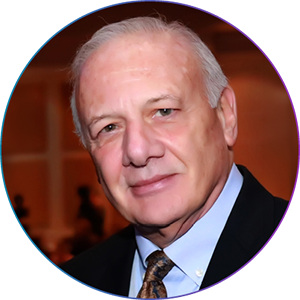
Thomas Nasca, MD, MACP: 2026 Award for Excellence in Medical Education
Educator, dean, and academic medicine leader Thomas Nasca, MD, MACP, has remained an unwavering, innovative force for improving health care in the United States and globally by advancing medical education throughout his illustrious career of nearly five decades. Dr. Nasca began his faculty career at the University of Pittsburgh, and in 1992 he moved to Jefferson Medical College (now the Sidney Kimmel Medical College at Thomas Jefferson University, in Philadelphia) to serve as vice chairman of medical education, becoming dean in 2001. In 2007, he assumed leadership of the Accreditation Council for Graduate Medical Education (ACGME), serving as president and CEO for 17 years. In this role, he led the development of the Journal of Graduate Medical Education and the Clinical Learning Environment Review (CLER) Program and Milestone Project, which have enabled the ACGME to assist programs and their sponsoring institutions in supporting the future physician workforce. Dr. Nasca’s vision of consistent, national accreditation standards resulted in the Single Accreditation System for all U.S. residencies, including those for DO programs. Since retiring as president of the ACGME in 2025, he has served as founding director of the ACGME Center for Professionalism and the Future of Medicine.
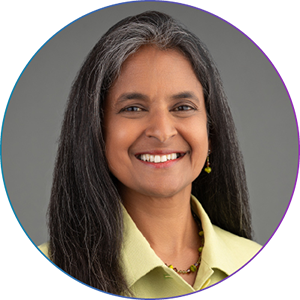
Shobhina Girish Chheda, MD, MPH: 2026 Alpha Omega Alpha Robert J. Glaser Distinguished Teacher Award
Across her 25-year career at the University of Wisconsin (UW) School of Medicine and Public Health, Shobhina G. Chheda, MD, MPH, professor of internal medicine and pediatrics and associate dean for medical education, has had a significant impact overseeing the undergraduate medical curriculum and assessment for hundreds of medical students. Leading the UW Medical Education Office across statewide clinical training sites in partnership with four major health systems, she directs six core teams comprising more than 70 faculty and 10 professional staff. One of Dr. Chheda’s most transformative achievements has been implementing the ForWard Curriculum, the most extensive curricular reform at the UW School of Medicine and Public Health since 1926. She has authored more than 40 papers on medical education and has been a significant contributor to Aquifer, a nonprofit, virtual-learning platform that provides interactive online courses and resources to more than 320 programs in North America and beyond. As current president of the Aquifer Educators Consortium, Dr. Chheda is responsible for all aspects of the consortium’s membership and strategy, and leads editors-in-chief who collectively oversee more than 200 virtual case-based courses.

David Hirsh, MD, FACP: 2026 Alpha Omega Alpha Robert J. Glaser Distinguished Teacher Award
Since beginning his career at Harvard Medical School (HMS) in 1995, David Hirsh, MD, FACP, has been a significant contributor to the field of medical education locally, nationally, and internationally. A vital member of the faculty and a guiding light in academic medicine, Dr. Hirsh currently holds several important positions, including professor of medicine, associate dean for undergraduate medical education with the Cambridge Health Alliance, director of HMS’ Academy Fellowship in Medical Education and Scholarship, and associate director of the Harvard Medical School Academy. Through wide-ranging scholarship, Dr. Hirsh has advanced the practice and pedagogy of medicine significantly. But his largest contribution has been the co-creation of the Harvard Medical School – Cambridge Integrated Clerkship (CIC). Believed to be the world’s first academic, specialist-based longitudinal integrated clerkship, the CIC translates the empirical sciences of learning into educational design. In 2007, Dr. Hirsh cofounded the Consortium for Longitudinal Integrated Clerkships (CLIC), a multinational educational research and advocacy organization. He also created HMS’ standardized patient Objective Structured Clinical Examination (OSCE) program, which he led for 15 years. In that capacity, he coauthored 18 OSCE standardized patient cases, work that has reached more than 2,000 HMS students.
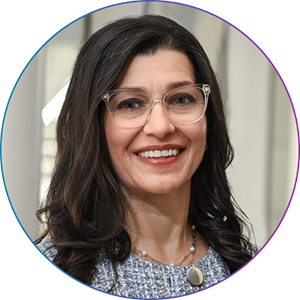
Nadia Ismail, MD, MPH, MEd: 2026 Alpha Omega Alpha Robert J. Glaser Distinguished Teacher Award
Nadia Ismail, MD, MPH, MEd, arrived at Baylor College of Medicine (Baylor), in Houston, in 2005 as assistant professor of medicine and, since then, has become vice dean of the medical school and one of its brightest lights in educational leadership and student engagement. As the founding director of what is now called the Transitions to Residency course, Dr. Ismail has transformed student readiness for core clinical rotations, enrolling nearly 190 students annually. At the institutional level, Dr. Ismail led Baylor’s first comprehensive curriculum redesign in 25 years while serving as chair of the Curriculum Renewal Working Group. During that process, she guided the development of a vertically integrated, competency-based curriculum and an entrustable professional activities – aligned program of assessment. This program now generates more than 20,000 workplace-based assessments annually. Beyond Baylor, Dr. Ismail has penned multiple MedEdPORTAL papers that have collectively been viewed and downloaded more than 13,000 times. This scholarship has informed curriculum design and implementation of science at institutions across the health sciences sector and led to multiple schools asking her to consult on implementing competency-based, integrated curricula.
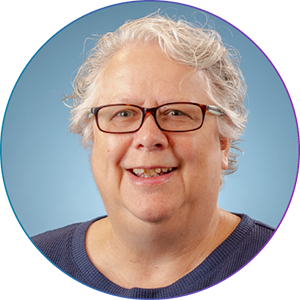
Julie Anne Kerry, PhD: 2026 Alpha Omega Alpha Robert J. Glaser Distinguished Teacher Award
After 16 years leading a variety of National Institutes of Health-funded investigations into molecular virology, viral gene regulation, and host-virus interactions, Julie Anne Kerry, PhD, turned her attention to medical education. Since then, she has had a significant impact on learners, particularly pre-clerkship students at the Macon and Joan Brock Virginia Health Sciences Eastern Virginia Medical School at Old Dominion University (EVMS). Now the EVMS Foundation Distinguished Professorship in Biomedical Sciences, Dr. Kerry also serves as vice chair of faculty development. In these roles, she leverages her research background to bring a methodical, measurable approach to improving the medical school experience, with a particular focus on the first 18 months of medical school. Her interest in addressing foundational deficiencies in pre-clerkship learners began in 2016 when she attended the Harvard Macy Institute Program for Educators in Health Professions. There, she led the development of an intervention program for struggling medical learners, which has evolved to become the Proficiency Enhancement Program (PEP) at EVMS, an optional program that runs parallel to the first-year curriculum. In addition, Dr. Kerry served as chair of EVMS’ Medical Education Committee from 2014 to 2023, overseeing the development and implementation of the CareForward Curriculum.