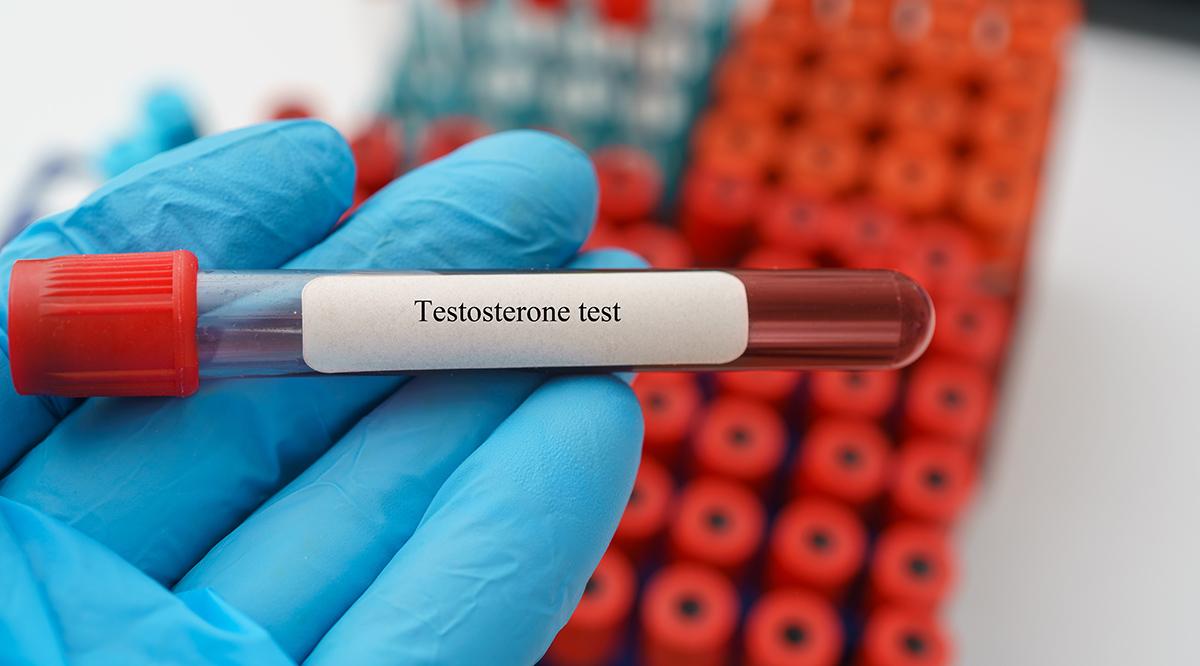
In recent years, endocrinologist Michael Irwig, MD, has seen growing numbers of men at Beth Israel Deaconess Medical Center in Boston ask for testosterone treatments to address an array of symptoms, including fatigue, low libido, and erectile dysfunction. While severely low levels of testosterone can cause such symptoms, most of the patients who request the treatments don’t actually need them, Irwig says.
“Most cases of fatigue and erectile dysfunction are not due to low testosterone,” says Irwig, an associate professor of medicine at Harvard Medical School (HMS). His clinical and research specialties include testosterone and other reproductive hormones.
It’s hard to convince some patients of that.
“There are myths on the internet and in social media that all of your symptoms are related to low testosterone,” he adds. “Just get on testosterone and you feel like you’re 20.”
The hormone is touted as an elixir of sorts, not only to boost sexual function, but also to grow muscles, improve mood, increase energy, and reduce bone frailty.
“It does have some benefits” for addressing various conditions in people with confirmed low testosterone, “but they’re modest,” notes Peter Snyder, MD, a professor of medicine in the Division of Endocrinology, Diabetes, and Metabolism at the University of Pennsylvania. “It also has risks,” says Snyder, the lead author and a central architect of the Testosterone Trials, the nation’s largest set of testosterone-treatment studies for efficacy.
While research by and large does not support using testosterone to address myriad health conditions, patients increasingly ask for it and doctors often prescribe it for off-label use.
“Although the number of testosterone prescriptions written have increased several-fold in the past two decades, carefully conducted randomized trials suggest modest benefits of testosterone therapy,” concluded a 2022 article in Reviews in Endocrine and Metabolic Disorders.
“Where the controversy resides is, does it increase physical function — the ability of people to do things,” says Shalender Bhasin, MD, who specializes in men’s health at Brigham and Women’s Hospital and HMS. “In older people, will it reduce the burden of disability” in ways that affect their lives? “That’s where the evidence has been less clear.”
What follows is a summary of some of what is known and what is uncertain about testosterone treatments.
What testosterone does
Although testosterone is widely thought of as a male hormone, everyone makes it. Males usually produce much more, mainly in the testes. Females produce smaller amounts in the ovaries and adrenal glands. Testosterone helps to regulate sex drive, reproduction, puberty-related changes, muscle and bone maintenance, and more.
Testosterone levels begin to decline modestly as people progress through middle age and into their senior years. In addition, some medical conditions cause significant reductions in testosterone among men at any age. Snyder offers an example: A man has a tumor that damages his pituitary gland and disrupts the production of luteinizing hormone, which stimulates the testicles to make testosterone.
Sometimes the body produces extremely low levels of the hormone, which can contribute to sexual dysfunction, low sexual interest, infertility, loss of muscle, osteoporosis and fractures, reduced red-blood-cell production, and symptoms such as low energy and depressed mood.
The diagnosis of hypogonadism (a condition in which the testicles or ovaries don’t make enough testosterone or estrogen) varies with characteristics of the patient, including age, so there is no standard measurement for it. For adult men, a normal range of testosterone is about 300 to 800 nanograms per deciliter of blood (ng/dL). In women, it typically runs from 8 to 60 ng/dL.
For people diagnosed with hypogonadism, studies consistently show that increasing testosterone produces some benefits. The Testosterone Trials — running from 2009 through 2015, with funding from the National Institutes of Health (NIH) — showed mixed results in men 65 and older with hypogonadism. The studies documented overall improvements in sexual function, bone density, and hemoglobin levels but little or no improvements in energy or cognitive function.
The U.S. Food and Drug Administration (FDA) has approved several testosterone-replacement therapies for hypogonadism in men. The therapies include administration of testosterone through injections, topical skin gels, skin patches, oral pellets, or nasal gels. Other treatments stimulate the body to make testosterone.
The reported risks of testosterone treatments for men who are not hypogonadal include infertility, cardiovascular damage, increased red blood cell counts, and (in women) deepening voice and facial-hair growth.
Other uses
Can testosterone treatments alleviate myriad medical conditions or improve deteriorating health? Many people hope so.
The U.S. Department of Defense plans to test the levels of testosterone in many soldiers and offer voluntary treatments to those with hypogonadism, to address such conditions as extreme fatigue.
But more and more people appear to be using testosterone boosters without that diagnosis and without a thorough assessment from a physician about whether testosterone therapy might improve their health.
“It is clear from clinical practice that there are many men using testosterone without a clear indication” of hypogonadism, notes the American Urological Association in its testosterone guidelines. “Studies estimate that up to 25% of men who receive testosterone therapy do not have their testosterone tested prior to initiation of treatment.”
An increasing number of people are receiving testosterone treatment, or medical advice about its use, from online websites that don’t provide thorough evaluations for their customers, Irwig says. Some of those people then seek their doctor’s prescription. Among Irwig’s patients, some who do not test with low testosterone accept his diagnosis that they do not need supplemental treatment, but others push back. He describes the ensuing dilemma for the physician:
“When I tell them that there are other things that could be going on, they’re disappointed. They were looking forward to me telling them that they have [hypogonadism] and getting on testosterone. I get pushback. They’re getting [information] through the internet and through all these antiaging companies that are selling testosterone to anybody.”
But “the evidence base is small” for the use of testosterone treatments to address various conditions, says Bhasin. “The studies haven’t been large enough.”
Nevertheless, doctors sometimes see improvements in patients who have lower levels of testosterone and receive treatment for such symptoms.
“It has modest effect on measures of physical performance,” Bhasin says of testosterone’s non-sexual benefits for elderly people. “Whether these effects can translate into clinical benefits in patient populations that are frail or have a mobility disability — that remains to be established in large, randomized trials.”
The few current studies involving testosterone treatments are aimed at specific groups or unanswered safety questions, according to listings at ClinicalTrials.gov, the NIH’s main clinical-trials registry. Included are studies about these treatments’ impact on hypogonadal men with some cancers and on muscle mass in hypogonadal men with spinal cord injuries.
Below are some of the groups that take testosterone treatments for conditions other than specific sexual functions in men.
Older men. Snyder and Bhasin say they sometimes prescribe testosterone for older men — such as those age 60 and above — who have low testosterone levels. The patients report having more energy and more ease of basic functions after starting the treatments.
“You see small, modest improvements in walking speed and in measures of performance that are related to strength, like stair-climbing,” Bhasin says.
Athletes. Testosterone is one of the hormones that weight lifters use to increase muscle mass, regardless of their baseline testosterone levels. The hormone increases the process for making muscle proteins, and supports the growth and repair capacity of muscle fibers. Physicians generally agree that these gains are not worth the risks.
“There’s no rationale for treatment of men who don’t have low testosterone,” Snyder notes.
Young men in particular are increasingly turning to testosterone, among other muscle-building substances, to boost muscle mass and performance, says Jason Nagata, MD, MSc, an associate professor of pediatrics at the University of California San Francisco (UCSF) who researches and treats eating disorders and muscle dysmorphia (a preoccupation with being insufficiently muscular) among boys and men. A lot of those messages “promote muscle-building substances like testosterone,” Nagata says. “It’s easy to order those substances online.”
The use of such substances is often combined with other potentially harmful behaviors and concerns, such as extremely rigid diets (for instance, consuming excessive amounts of protein and very little carbohydrates or fats), combinations of drugs and supplements, and severe distortions about the inadequacy of their bodies (body dysmorphia). That can set off myriad adverse physical and mental health conditions, Nagata adds.
Nagata says that when he has encountered young men using testosterone for muscle building, they have typically obtained it without a prescription from a medical provider.
Competitors in sports apart from weight lifting, including recreational athletes, sometimes use testosterone treatments to enhance performance as well. But such efforts to boost testosterone are largely banned, with narrow exceptions.
“It’s important to acknowledge that testosterone does build muscle in the short term,” so its use is immediately rewarding, Nagata notes. “Many of the young people I take care of don’t think about the long-term effects.”
Women. Some women use testosterone treatments off-label as well, as described in this New York Times article, in which women raved about their increased energy and sex drive. Studies and individual patient responses indicate that testosterone treatments can improve some health conditions for women, although the benefits are under debate. The strongest benefits appear to be for hypoactive sexual desire disorder (HSDD), defined by a Mayo Clinic project as a persistent lack of sexual desire that is not better explained by another condition.
“The only evidence-based indication for testosterone therapy for women is for the treatment of HSDD,” as clinician presenters explained in an FDA workshop this past September.
Miriam Sivkin, MD, an obstetrician-gynecologist at the Carolyn Rowan Center for Women’s Health and Wellness at Mount Sinai Hospital in New York City, prescribes testosterone for women with signs of HSDD.
“A lot of [female] patients do so much better when they get testosterone,” Sivkin says.
The benefits extend beyond sexual activity, she says: “If they have a much more fulfilled sexual life, that also will affect their moods and cognition. They will feel better in terms of quality of life.”
Physicians writing testosterone prescriptions for women face challenges. There are few studies on the impact of testosterone treatments for women, and no such treatments are approved by the FDA. In 2004, Procter & Gamble withdrew an application for a testosterone patch for women amid concerns about safety, including increased risks of deepened voices, facial hair, balding, and, in certain cases, cardiovascular disease.
Without government guidance, physicians are left to their own calculations to prescribe testosterone for women based on the suggested doses for men.
“We don’t have a formulated medication for us to prescribe” to women, Sivkin notes. “We’re using a male formulation.”
Where this leaves doctors
While many doctors have seen testosterone treatments improve some conditions in some patients — such as giving them more energy — physicians face a dearth of evidence that these treatments provide consistent, significant benefits for people without hypogonadism.
With such questions still unanswered, Snyder summarizes the evidence base this way: “For any purpose other than replacing missing testosterone, can it [testosterone treatment] be useful? The answer is no.”