U.S. colleges and universities have come under intense pressure in the past few years. Multiple institutions, including medical schools, have been accused of violating antidiscrimination laws in their admissions decisions. Millions of dollars in federal research funding has been withheld, often with little warning. Changes to federal visa policies have negatively impacted international students. More recently, questions about whether a college degree is worth it — in terms of a return on investment in a student’s future career and earnings — as well as falling birth rates, have led to a decline in domestic student enrollment.
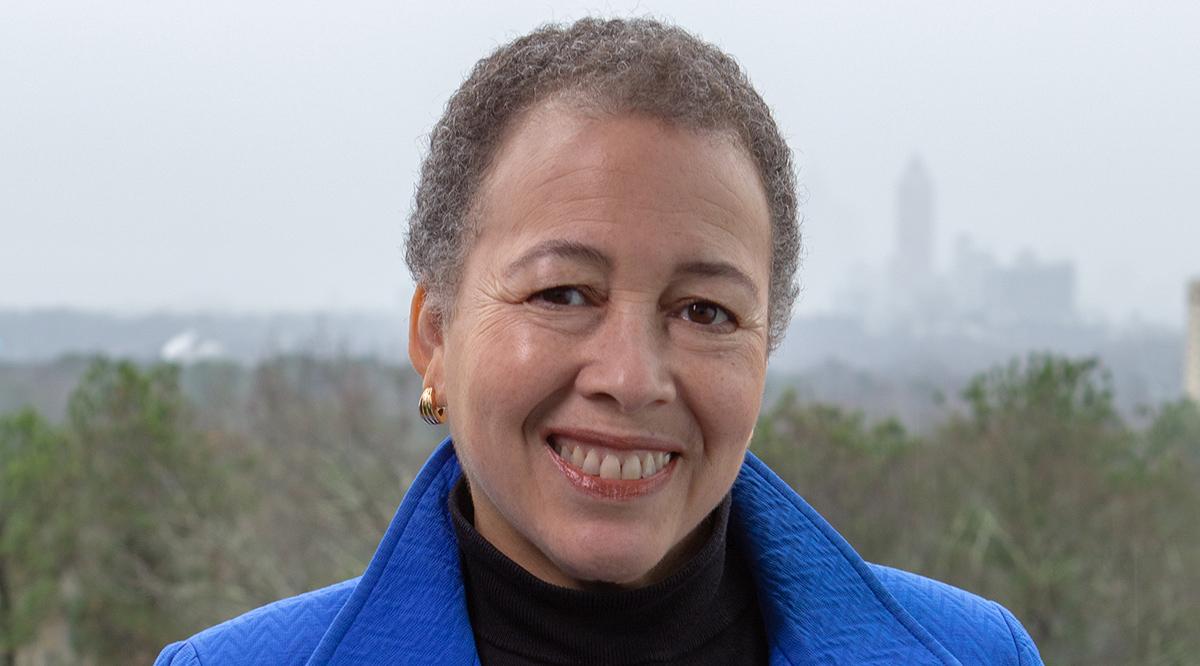
Beverly Daniel Tatum, PhD, best-selling author and president emerita of Spelman College, in Atlanta, is no stranger to these and other challenges facing universities. In fact, her 2025 book, Peril and Promise: College Leadership in Turbulent Times, examines many of these issues in detail — and offers a blueprint for navigating the growing political, social, and financial turmoil.
Dr. Tatum will join Art Coleman, JD, a founding partner of EducationCounsel, for “A Conversation on Courage” — at Learn Serve Lead 2026: The AAMC Annual Meeting, on Saturday, Nov. 7 — to discuss how institutions can uphold their core values while adapting to evolving expectations and constraints.
A few weeks ago, Dr. Tatum sat down with AAMCNews to discuss these issues and more.
This interview has been edited for brevity and clarity.
Can you share your thoughts on why colleges and universities have come under attack from so many forces of late?
Well, I think there are multiple reasons, and some of them are political, but not all of them. Certainly, one of the things we know has been a concern for a long time is affordability. And people wonder: Is it worth it? Is the debt that my child is going to take on, or maybe I, as the parent, am going to take on, worth the outcome? I think especially if you are not college educated yourself — and there are lots of people in that category — if your kids are first generation, college is something you aspire to for them. I think many parents would say, and have said historically, I want my child to go to college. But at the same time, you don’t necessarily have firsthand experience of the transformation that that college experience represents, and yet you do know what it means to be in debt. You do know what it means to not be able to pay bills you need to pay, and you fear, as a parent, you fear for the future of that child.
There has always been sort of a stereotype: the student with $100,000 in loans working at Starbucks. That is not typical; that’s the headline, but it’s not typical.
And yet, in today’s world, where employment opportunities at the entry level seem to be evaporating [due to artificial intelligence], how do we think about what our students need to be able to do to demonstrate their value in the employment marketplace?
The United States is increasingly divided along party lines. As a former college president, you write movingly about the power of education to broaden perspectives. Given the affordability question, among others, how do you communicate that to a skeptical audience?
I think it is very challenging. Let’s talk about Derek Black [the godson of former Ku Klux Klan grand wizard David Duke and heir apparent to the white supremacy movement]. Here’s someone who entered into an institution, New College of Florida, because he’s interested in medieval studies, and they have a good department in that. His parents are thinking it’s a mostly white institution, not that diverse, and so how bad could it be [from their perspective]? Even though their perspective is not mine, it’s hard not to feel some sympathy for them, in the sense that they have this child they care a lot about, they send that child off to college, and then he is exposed to ideas that run counter to theirs. Black comes to recognize the limitations of that worldview. [He eventually renounced white supremacy, attributing his transformation to the teachings and friendships he made at New College.]
Before I became a college president, I taught a course on the psychology of racism, and my book Why Are All the Black Kids Sitting Together in the Cafeteria? chronicles a lot of the learnings in that. And students would often say that they would bring home some of the stuff they were reading, or they’d be watching television with their families, and they’d start to recognize stereotypes in the media. Or they’d hear jokes that used to be considered funny, but now they felt were offensive. And as their views shifted, it did cause some discomfort. But in some cases, I also heard from parents who said, “My daughter shared your book with me. I’m so glad I had a chance to read it.” They were able to bring their families along in ways that allowed them to all grow together.
In my view, that’s the ideal. That’s the power of education, and we don’t need to be afraid of that.
In your book [Peril and Promise] you identify three goals — you call them the ABCs — that you believe best support student academic and social success and well-being. Can you talk about those?
The ABCs — Affirming identity, Building community, and Cultivating leadership — have informed every leadership role that I have held in higher education.
First, the A — Affirming identity.
Say we’re taking a group photo. What’s the first thing you’re going to do when you get your copy of that group photo? You’re going to look for yourself in that picture. And if, for some reason, you’re not in it, you’re going to wonder: What’s wrong with this picture?
We need everyone in the picture, and, of course, everyone wants to be in the picture.
Now, if you’re the person who’s used to having yourself at the center of the picture, big face, and everybody else’s little face is around you, and you now have a picture where I can see everyone, and they’re all sort of equally sized, you might think that’s a terrible picture. If that’s your ideal, you’re not going to be happy. But most people just want to feel like they have been well represented.
If you can say to a group of people, we are trying to accomplish something here, and we want to accomplish it in a way where everyone’s voice has been heard, and everyone feels that they’re well represented, we should be able to get to a place where we achieve that goal and can feel really proud of ourselves for having done so.
The job of the leader is to be able to frame the conversation in a way that makes clear to everyone that they are part of the solution.
We need everyone to realize that we’re all in this together. How do we build community in a way that people can feel the benefit of that community. In this moment of polarization, learning the skills of dialogue is really important. But the most important piece of that dialogic skill is learning to listen to people, to listen carefully to what someone is saying.
You also talk about cultivating leadership, not just among the faculty, but among students and staff.
What is a leader? A leader is someone who influences other people, and ultimately we all influence other people. Some people influence lots of people, some influence a smaller circle, but everyone influences other people. People are watching what we do, they’re hearing what we say, they’re following our example.
And the leader is really someone who is learning how to expand that sphere of influence toward a common goal, a shared vision, and bring other people along.
That’s the benefit of bringing people together to say, “Here’s the problem we’re trying to solve.” You know, this group that is sitting around this table is intentionally diverse in one way or another. Diverse in terms of the roles you have. Diverse in terms of your religious background. Diverse in terms of your time on campus, the people you influence, the communities you represent. And if you all can figure this out, it’s going to be a benefit, not just to you, but also to the wider community.
One of the things that many institutions struggle with, and we hear a lot about, is ideological diversity. Who gets invited to speak on campus? Who are we willing to hear from, and who are we not?
I have a point of view about that, which is to say, when I was president, there were people I did not want to invite, and didn’t. However, if somebody else decided they’d like to invite them, I didn’t say no. If you want to invite that person with that perspective that seems counter to the values of our organization, you can do that.
This is a great segue to my next question, which is about academic freedom. On the one hand, you have students actively protesting on campus, and on the other, you have college presidents who have been fired for allowing those students to protest.
Academic freedom is very important to the academic enterprise. Historically, just think about ideas that were thought to be wrong — like the world is flat — only later we discovered that the world is not flat and the people who said it was round weren’t crazy.
Our understanding of the world evolves, and we are strengthened by having to defend our ideas. If I’ve got a point of view and you disagree with me, if we are having a measured debate, it forces me to clarify and refine my examples in ways that will strengthen my argument or help people better understand what I’m trying to say. That’s an important part of the academic enterprise.
At the same time, protest, freedom of speech, is also a time-tested tradition, a long-standing tradition, in our country, and it’s important for people to be able to stand up and protest, express their First Amendment rights.
We have to create an environment where multiple perspectives can be shared.
If someone’s expressing a point of view that you don’t like, then create space for other voices to speak up about [that voice]. You don’t say, “He can't speak” or “She can’t speak.” You just add more voices to the mix, so that people understand this is not the only point of view, and there are smart people who disagree with that point of view.
And I think that that’s the role of the institution, to create the space for that kind of learning.
Colleges are facing enormous financial strain right now. You talk in your book about the enrollment cliff due to a decline in the domestic student population. There’s also the decline in the international student population. How are college presidents and other academic leaders coping with the financial implications of that?
Some colleges are closing, or they’re cutting whole programs. It’s really, really challenging, under the best of circumstances. It’s not like you’re sitting on a big pile of money, even if you’ve got a huge endowment. If you look at an institution like Harvard, they’ve got more money than anybody. And yet when the stock market tanks, they’re vulnerable, because they’re so dependent on their endowment.
They’re also very dependent on the tuition paid by those international students. Most places are not giving much financial aid, if any, to international students. They’re paying full freight and helping to subsidize everybody else.
So, when people say, “We don’t want any international students here,” I think they are not aware of the financial impact. If those students aren’t there, then your tuition’s going up or your program’s being cut.
Then you think about the inflationary pressures, whether that’s food in the dining hall or fuel for the transportation being used on campus, health care costs — all of those things. There are many things that leaders are thinking about, not to mention AI and the costs of responding to the technological infrastructure that’s needed. So, all of these things are just more and more expensive, and you’re trying to keep your costs down so you can be affordable.
And then you have somebody coming along that seems to be, very cavalierly, saying, “Oh, we’re going to freeze that, cut that. Oh, you’ve already started that grant program, and you’re five years into a 10-year research project? Too bad for you — no more funding.”
It’s just so misguided.
When I was writing the book, I just kept asking myself, to what end? Why are we trying to destroy higher education in America? It’s been one of the shining stars for so long, and the partnership between the federal government and Research 1 universities, in particular, has been responsible for so much innovation.
Why do we want to mess that up now? That is something I still wonder about.
The title of my book is Peril and Promise, and there is certainly lots of peril, as we’ve been talking about. But I think the promise is the people.
There are people all over this country, in every institution, and people preparing to enter institutions, who understand the value of what those institutions represent, and who are committed to the mission of educating that generation of medical students or undergraduates or whomever, in ways that will benefit our society for generations to come.
That’s the promise, and I think that it’s not so much optimism as it is vision. If you can hold on to the vision, you can get through the storm.