Medical Simulation in Medical Education
In 2023, the AAMC fielded a survey among U.S. and Canadian medical schools, teaching hospitals, health systems, universities, and health sciences centers to better understand the use of medical simulation in medical education.
The survey was designed to:
- Inventory the latest technologies used around simulation.
- Consider the metrics used to evaluate the effectiveness of simulation.
- Understand how simulation is used to assess competencies.
- Identify resources — including physical space, finances, and staffing — required to deliver simulation activities.
- Explore how the COVID-19 pandemic affected simulation use and understand potential uses for the future.
Results
The survey consisted of 39 core questions, and the AAMC received 116 responses representing the following:
- 55 medical schools.
- 18 universities.
- 16 health systems (representing 184 hospitals).
- 15 teaching hospitals.
- 6 health sciences centers.
- 2 medical school single departments.
- 2 teaching hospital single departments.
- 2 sites representing both a medical school and a teaching hospital.
The total respondent pool represented 39 states (all nine census divisions), Canada, and the Virgin Islands.
Results Preview — What It Takes to Run a Simulation Center/Program
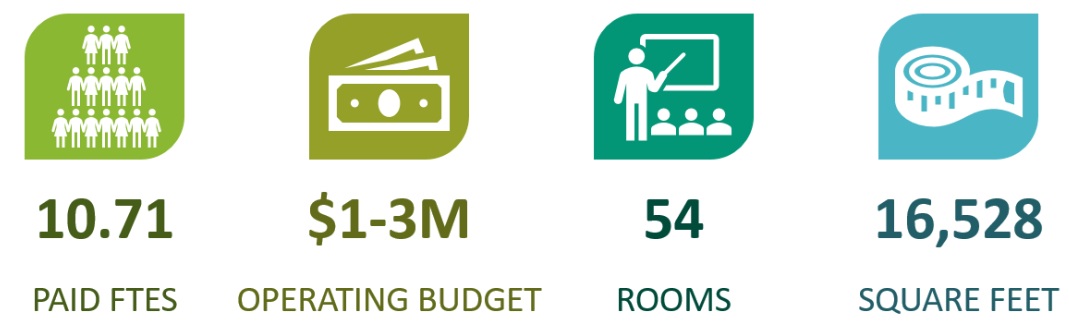
Based on the following number of respondents: 96 for FTE, 70 for operating budget, 107 for rooms, and 82 for square feet.
Data Requests
If your institution participated in the survey, your survey contact may request the full, institutionally identifiable results for your internal use only. All other AAMC-member institutions may request the aggregated data results. All data requests can be made by email to SimSurvey@aamc.org.