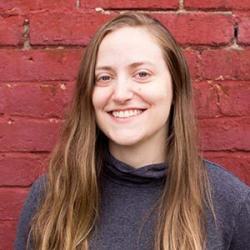
Before attending medical school, Sarah Levy spent a summer working in Emergency Medical Services in Israel. Most of the calls for assistance came from older adults with a variety of ailments, a fact many of her fellow medics found annoying.
“There was no filter. People would be really upset and demeaning about that,” recalls Levy, who is now a first-year student at Virginia Commonwealth University (VCU) School of Medicine in Richmond. “I recognized this was not OK, this was kind of toxic, but I was surrounded by [it].”
Unfortunately, Levy’s experience with her fellow medics’ attitudes toward older people is prevalent, particularly among health care workers.
About 1 in 5 people over age 50 report having experienced age discrimination in a health care setting, according to a 2015 study. It’s an issue that researchers at Yale School of Public Health estimate costs the health care system $63 billion a year and can have serious negative effects on the physical and mental health of those discriminated against.
As the proportion of the population over age 65 is increasing rapidly, some medical schools have developed senior mentoring programs that pair medical students with older-adult mentors to help overcome stereotyping and ageism, and to give older adults opportunities to engage with and give back to their communities.
During a gap year she took between graduating from Cornell University in Ithaca, New York, and starting at VCU, Levy volunteered with an organization teaching indoor rock climbing to people with Parkinson’s disease, many of whom were over age 60.
“That shifted my perspective,” she says. “I’m seeing people who might struggle to walk, or to tie their shoes, but they’re fine on 60-foot walls.”
It’s one of the reasons she was excited to take part in VCU’s mentorship program, Senior Mentoring.
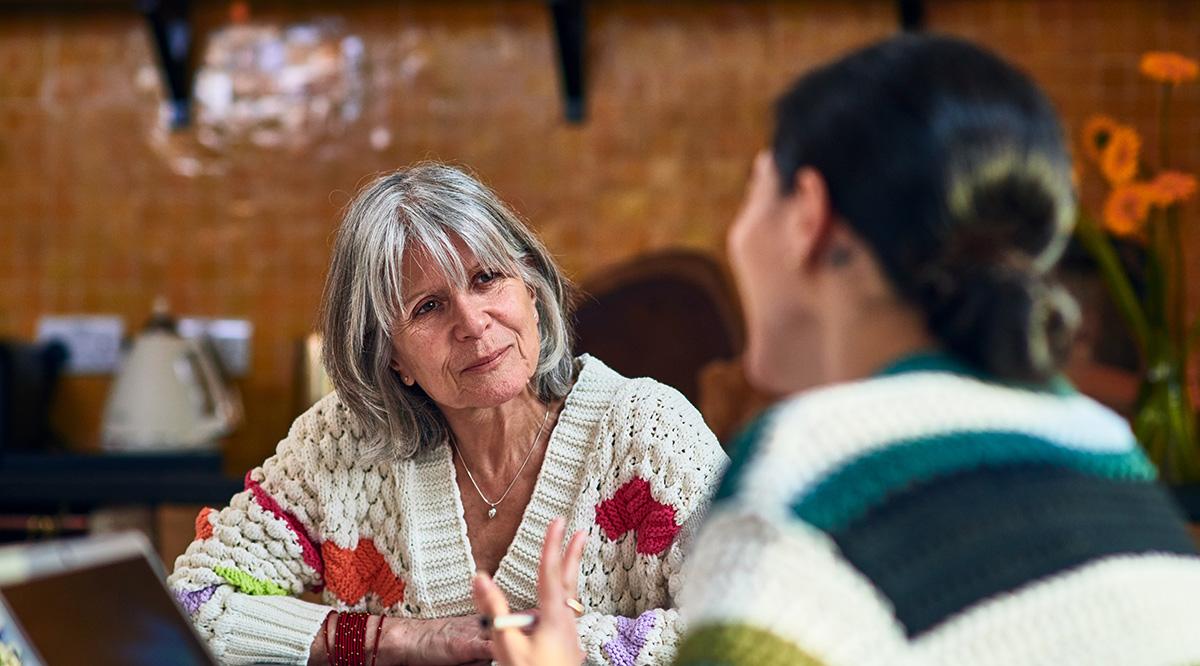
Levy’s mentor, with whom she’s met once so far, had plenty of notes on how doctors can better care for older adults, collected from her own experiences with the medical system.
The number one tip: Take time to listen to your patients.
“It’s great because she’s got good advice,” Levy says. “I want more of those tidbits from her.”
Shifting attitudes on aging
VCU’s program is one of several similar initiatives that Micayla Flores, MD, a second-year internal medicine resident at Massachusetts General Hospital, included in a review published in the August 2025 issue of Academic Medicine.
Flores and her coauthors identified and examined the structures and impact of mentorship programs on students and mentors at 19 medical schools across the country.
“I wanted to understand what existed previously to develop relationships with older adults outside the hospital,” Flores says. In the hospital, “we’re seeing older adults in a very different way than we do in everyday life.”
“Students in medical school tend to only see frail elders in the hospital setting,” says Leland “Bert” Waters, PhD, director of the Virginia Geriatric Education Center, who led the mentoring program for years. “Yet only a small percentage — less than 5% — are frail enough for long-term care.”
When VCU’s Virginia Geriatric Education Center started in 1987, one of the goals was to help students recognize the diverse experiences of aging and to build more empathy for older-adult patients.
Flores found that the 19 medical schools that had published research on their mentorship programs had positive outcomes. But her review also revealed that only nine of those programs were ongoing as of 2024, when she performed the review. Several had been discontinued due to lack of funding or trouble recruiting and retaining mentors.
“There was excitement about these projects at the end of the '90s and in the early 2000s,” Flores says. Because of federal initiatives to teach geriatrics across specialties, several medical schools found creative ways to integrate it into the curriculum. “One element of that was mentorship. One of the takeaways [of the review], unfortunately, was a lot of those programs don’t exist anymore.”
It’s an issue she would face at Harvard Medical School (HMS). After completing the review, Flores and her colleagues put together a curriculum, recruited older-adult mentors who were active HMS alumni, and made the program a requirement for all first-year students in the spring of 2024.
From studying how similar programs worked, Flores hypothesized that recruiting older-adult mentors who were alumni of the medical school would help with mentor retention and could give students an additional investment in the relationship, since the mentors could also give them professional advice from their careers.
Flores conducted surveys and focus groups with the mentors and mentees in the middle and at the end of the pilot period.
“Overall, [the program] was very positively received,” Flores says. “From the mentor perspective, the overwhelming theme was that they felt incredible value in being able to share the lessons they learned over time. From the students, [there was also] a very positive response, with a diversity in the level of excitement and engagement.”
But after its first year, the program was paused due to lack of administrative resources. Still, Flores is hopeful that the alumni-mentor model can be successful if the program is restarted in the future.
“Research suggests there is ageism in society and ageism in medicine,” Flores says. “It’s important as a doctor, as a learner, as a medical student, to maintain and continue to have those evolving relationships with older adults on the entire spectrum [of aging]. It’s grounding to your ability to develop empathy for the person you’re seeing.”
Building connections
VCU’s Senior Mentoring program, one of the longest running of such initiatives in the country, is required for all first-year students.
They receive education on geriatrics and ageism and then meet in pairs with an older-adult mentor at least three times during the academic year.
In the past 15 years, the program has built a robust core group of older-adult mentors by recruiting through community organizations.
“Once you get a good volunteer, they tend to stay for five to 10 years or more,” Waters says.
Bren Goodman, for example, has been volunteering as a mentor for about five years and has enjoyed getting to know a wide range of students.
“Each relationship has just been fabulous, and each student pairing is different,” Goodman says.
She was inclined toward participating in this program, in part, because of her own career working for the state to develop housing for older adults. She was also the caregiver for eight of her older relatives, including grandparents, parents, and four aunts, at different times in her life.
Now, as a retiree at 72, she volunteers in hospice care and hopes to encourage her medical-student mentees to be intentional about not allowing the age of their older-adult patients to negatively affect how, as future doctors, they interact with these patients as individuals.
“The last time I was together with my current folks, my knee joint got stuck. I couldn’t stand up for a moment,” Goodman says. “They were worried, but I laughed and said it happens all the time. It’s fine.”
She hopes that her humor and calmness in acknowledging her changing body will remind the mentees of how people all adjust to inevitable changes in individual ways.
In 2024 several Virginia researchers, including Waters, surveyed older adults about their experiences as mentors and found that most had positive feelings toward it, saying it made them feel connected to the younger generation, useful, and like they were making a difference.
Another research paper Waters published in 2023 studied the attitudes of medical students on their own aging. The researchers note that, although senior mentoring programs have shown to improve students’ views of aging and empathy for older adults, there has been little growth in the field of geriatrics, and the use of derogatory language about older people and aging is still common.
Students were asked to reflect on their feelings about their own aging, and the researchers found there were a variety of responses, from people dreading getting old, others thinking of it positively, and many having nuanced and complex views.
“The way students think about their own aging may provide a basis for future training and interventions,” the researchers state in the paper. “More work is needed to fully understand how we come to develop the views we have of our own aging and how this might relate to our broader views of aging and of older adults.”
For Kayla Emond, another first-year medical student at VCU, the Senior Mentoring program has given her a better perspective on aging and older adults.
“When I think about aging, it’s like a distant black haze that’s way off in the future that I don’t want to deal with now,” Emond says.
But meeting with her mentor and hearing about his experience with aging has helped Emond think about her own future with less dread.
“He was honest with us about how you have to be realistic with yourself,” she says. “Aging is the one constant in your life. Yes, with aging you have limitations, but it also opens more doors for you.”
Emond adds that the mentorship program is an important resource for medical students who are likely to treat many older people throughout their careers.
“Part of being a physician is understanding individuals with backgrounds different from yours,” she says.