
During her general surgery sub-internship at West Virginia University (WVU) School of Medicine, fourth-year medical student Andrea Hincapie-Bendeck assisted in removing part of a patient’s bowel, necessitated by a ruptured diverticulum. At discharge, the patient asked the surgical team for information on what to eat.
Hincapie-Bendeck stepped in and described the fiber-rich diet that would meet the patient’s nutritional needs while helping to avoid a recurrence of the condition.
“I knew the answer because of all my training,” the medical student says.
Hincapie-Bendeck, who plans to be a surgeon, knew how to counsel the patient because she participates in WVU’s Culinary and Lifestyle Medicine Track. The four-year training is designed to equip medical school graduates with the skills and expertise to help patients head off chronic diseases including diabetes, obesity, and cancer.
Like West Virginia, more medical schools — among them, Loma Linda University School of Medicine in Loma Linda, California; the University of South Carolina School of Medicine Greenville; UTHealth Houston’s McGovern Medical School; Tulane University School of Medicine in New Orleans; and the newly minted Alice L. Walton School of Medicine in Bentonville, Arkansas — have committed to infusing preventive and lifestyle medicine into undergraduate medical training.
The learning takes a variety of formats: Some schools offer related electives and extracurricular opportunities such as culinary medicine or teaching kitchens, while others have a robust lifestyle track or concentration parallel to standard training. A small number of programs have embedded the impacts of nutrition and lifestyle behaviors directly into the core curriculum.
So far, nutrition has received the most vigorous attention among the lifestyle components. Although less than 30% of medical schools provided benchmark levels of nutrition education in 2014, 100% offered some level of training in 2025, with 82% incorporating nutrition in both required and elective components, according to AAMC data.
Some experts have been encouraging greater focus on other lifestyle issues, such as a 2023 study of medical students regarding formal training on physical activity counseling for patients and a separate study calling for increased attention to sleep education.
“The AAMC recently issued a call to action to medical schools to assure they have strong nutrition education in their curriculum,” says AAMC Chief Academic Officer Alison Whelan, MD. “We are confident this will continue the momentum in medical education to continue improving people’s health.”
Physical medicine and rehabilitation specialist Beth Frates, MD, immediate past president of the American College of Lifestyle Medicine (ACLM), has witnessed a similar trend.
“We now have Lifestyle Medicine Interest Groups (LMIGs) at roughly 120 out of 200 [MD- and DO-granting] medical schools,” says Frates, a part-time associate professor at Harvard Medical School who launched the first LMIG at the school in 2008. “The momentum is unmistakable.”
Here are several standout schools that are prioritizing prevention as part of their mission and community-engagement efforts.
West Virginia University School of Medicine
West Virginia has long lagged behind the rest of the country in health outcomes. Data show that West Virginia’s diabetes mortality rate is 53% higher than the national rate, and the death rates from heart disease and stroke are 19% higher.
Since many of these chronic conditions can be improved through diet and exercise, in 2017, the WVU School of Medicine started a longitudinal Culinary and Lifestyle Medicine Track, which covers four foundational concepts of wellness — nutrition, physical activity, stress management, and sleep. Students compete for spots in the concentration, which requires extensive dedicated training, in addition to completing the school’s core curriculum.
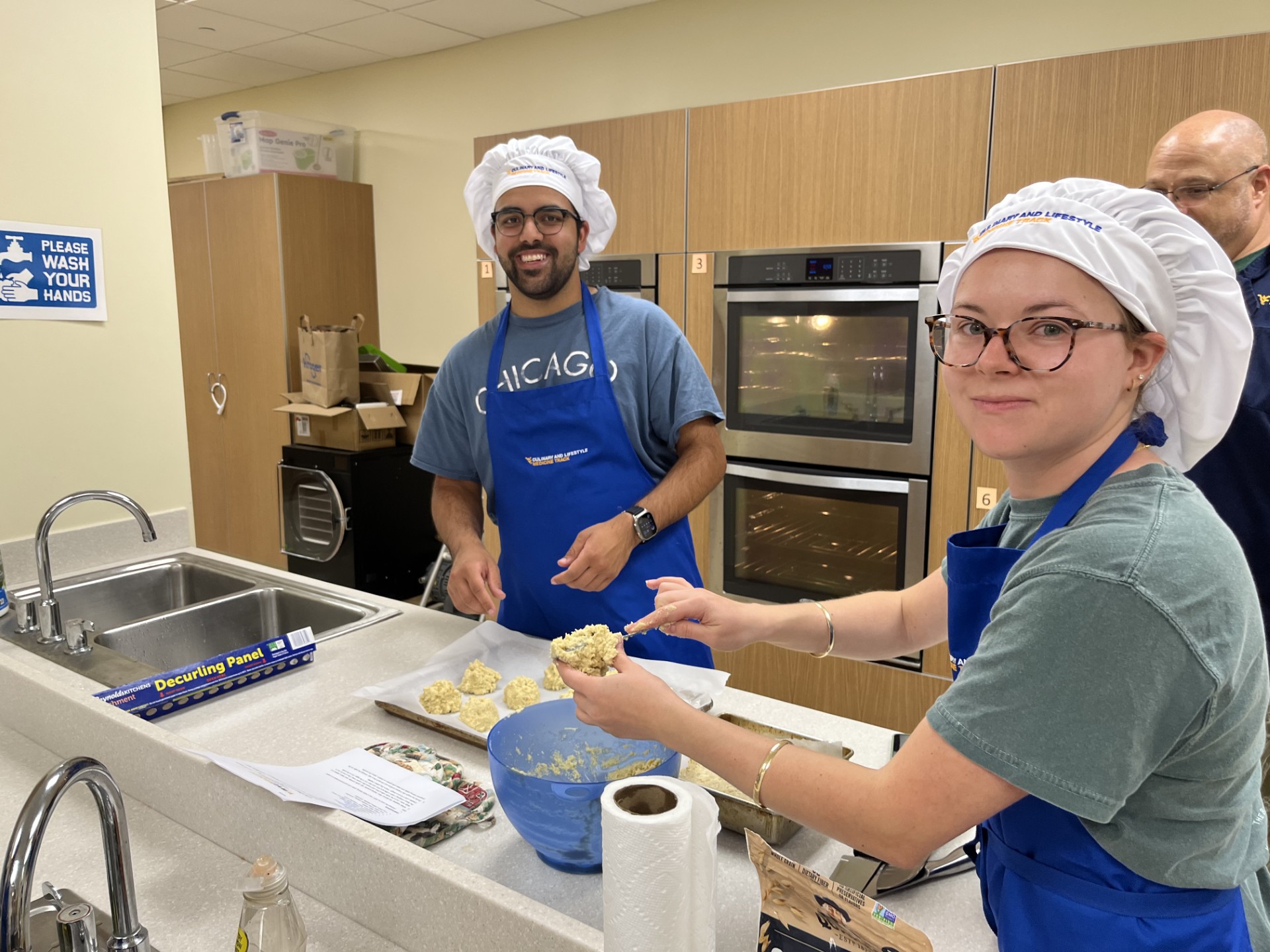
West Virginia University School of Medicine students Arjun Tomer and Jade Schlegel.
Credit: WVU School of Medicine
“We started with a tiny $5,000 innovation grant and a big interest in diabetes and nutrition,” says family medicine physician Rosemarie Lorenzetti, MD, MPH, codirector of the track. “What grew from that was a hands-on curriculum that showed medical students how food and lifestyle could prevent disease — not just treat it.”
The track’s first- and second-year students participate each semester in Clinical Learning Groups centered around the four lifestyle areas. They are also part of a journal club and engage with teaching kitchens at the Davis College of Agriculture and Natural Resources at the school’s main campus in Morgantown. Plus, they complete assigned readings and nutrition modules. The cornerstone of the track is a summer externship, in which students live together preparing healthy meals, plan a community cooking demonstration, and participate in a community walk.
Third-year students at the university’s three campuses are assigned nutrition modules that complement their clinical work, such as treating congestive heart failure during the internal medicine clerkship. Fourth-year-track students take two two-week elective rotations in culinary and lifestyle medicine. One of the two-week rotations is virtual and attracts half the school’s fourth-year students. The other two weeks involve working with faculty with an interest in culinary, lifestyle, or obesity medicine, including both primary care and specialist physicians.
“Every patient that we’re going to be seeing, whether in primary care or a specialty, is most likely going to have some pathology, some disease state, that is strongly influenced by what they’re eating and how they’re living,” says fourth-year student Joshua Peterson. “So, the training we’re getting in this is going to be exceptionally relevant to our patients.”
Students also do community service projects, such as creating healthy lunches for kids for an outdoor field day and learning about community resources for people living in food deserts — information they can pass along to future patients.
UTHealth Houston’s McGovern Medical School
After graduating from McGovern six years ago, Puja Gandhi, MD, MPH, worked briefly as a primary care physician in private practice. She felt stymied.
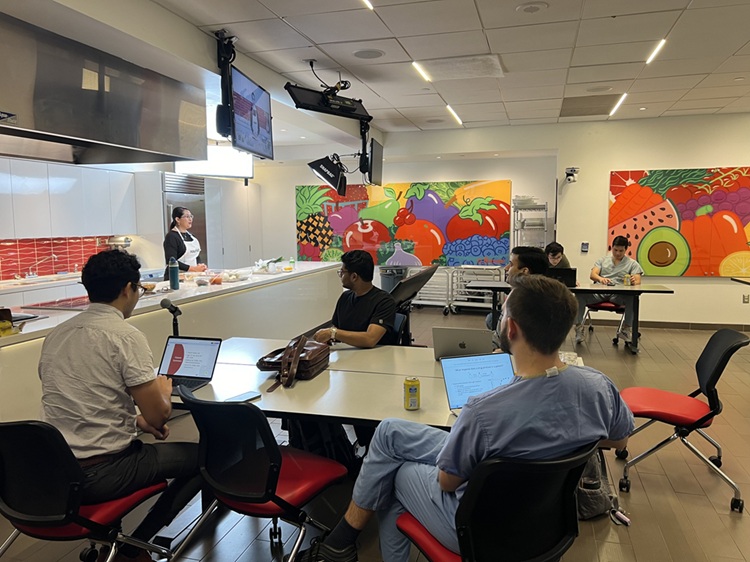
McGovern School of Medicine students in the NOURISH Teaching Kitchen of the UTHealth School of Public Health.
Credit: McGovern School of Medicine
“I realized I didn’t know how to talk to patients about basic questions like ‘What should I eat?’ ‘How many minutes of physical activity do I need?’ And for someone with osteoporosis, ‘How do I incorporate physical activity into my life to prevent fractures?’” says Gandhi, assistant professor in internal medicine and associate program director for the internal medicine residency at the school.
When she returned to McGovern as a faculty member several years later, she used the opportunity to improve her understanding of behavioral impacts and spearheaded a lifestyle medicine concentration, using as a foundation the ACLM’s six “pillars” of lifestyle medicine — a whole-food, plant-based eating pattern; physical activity; restorative sleep; stress management; avoidance of risky substances; and positive social connections.
“We use these pillars as a primary modality to treat and prevent chronic disease and even acute conditions,” Gandhi says.
A key first-year experience is participation in ICARE (Improving Care Access and Realizing Empowerment), an interprofessional student-led program that pairs medical students with dietetic interns and nursing students. Students see clients from the border area as well as Houston and participate in a mandatory culinary medicine week, which gives them the chance to learn how to talk to patients about their lifestyle choices in a culturally sensitive manner and watch a cooking demonstration teaching basic knife and cooking skills, Gandhi says.
“This is one of their first exposures to experiencing how the social determinants of health relate to lifestyle habits, such as what patients are eating,” Gandhi adds. “Students see how counseling patients on making positive behavior changes can make a difference in managing their chronic conditions.”
Students also shadow lifestyle-related professionals, such as nutritionists, psychologists, or sleep specialists, and volunteer at a food bank, farmers market, or farm. And they attend journal club meetings, meditation sessions, other culinary medicine classes, and mindfulness yoga classes. Fourth-year students carry out a research project and can participate in two lifestyle medicine electives.
University of South Carolina School of Medicine Greenville
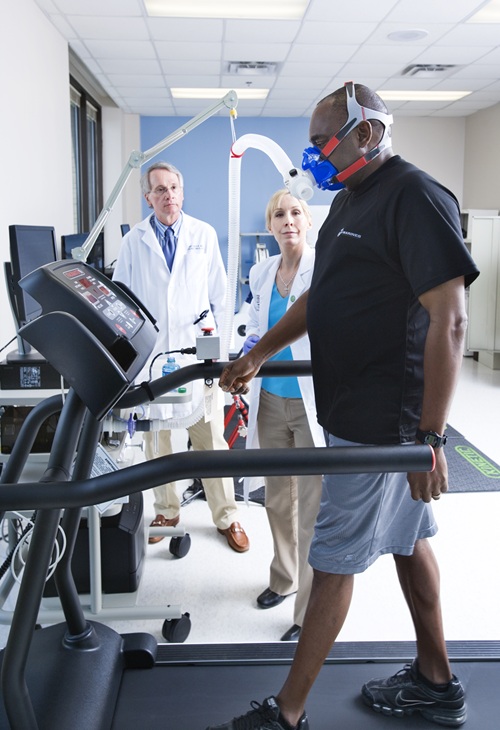
W. Larry Gluck, MD, retired medical director of the Prisma Health Cancer Institute and Jennifer Trilk, PhD, director of Lifestyle Medicine Programs at USC School of Medicine Greenville, with a patient.
Credit: Prisma Health
When the University of South Carolina was establishing a new medical school at its Greenville campus in 2012, it made the bold decision to entwine aspects of nutrition, exercise, and other lifestyle behaviors extensively throughout its curriculum. For instance, lectures on neurogenesis and neuronal repair include research showing that physical activity increases brain-derived neurotropic factor (BDNF) — a substance that researchers have dubbed Miracle-Gro for the brain.
“We thought, ‘How can we start at the root cause of chronic diseases and teach our doctors how to prevent them?’” says clinical exercise physiologist Jennifer Trilk, PhD, director of Lifestyle Medicine Programs at the school and the driving force behind the focus.
It wasn’t always an easy lift. But founding dean Jerry R. Youkey, MD, a retired vascular surgeon, recognized the need for the approach.
“He saw the downstream effects of poor lifestyle choices in the operating room,” Trilk says.
The curriculum now includes required lifestyle content across all four years of training.
Third-year students receive required lifestyle medicine content in primary care clerkships at Prisma Health health care system. There’s an additional fourth-year lifestyle medicine elective.
Prisma has also adopted a preventive focus in primary care. Patients’ electronic health records prompt physicians to ask about lifestyle habits and give patients “exercise prescriptions,” to be filled through a collaboration with the local YMCA.
The school also added culinary medicine opportunities for all first- and fourth-year students in 2017 and plans to launch a mobile teaching kitchen in communities of need in 2026.
Meanwhile, campus culture encourages students to walk the walk, literally. On any given day, students participate in hikes or runs, play soccer, or tend the student garden.
Indeed, in recent program surveys of the school’s fourth-year students completed shortly before graduation, 86% said they are changing their own lifestyle behavior based on what they learned in the classroom, Trilk reports. And 87% of them reported that they have implemented lifestyle medicine principles in their medical practice.
The school’s success has inspired other institutions to embrace lifestyle medicine: Close to 150 medical schools in 99 countries around the world have accessed its open-source curriculum — LMEd (Lifestyle Medicine Education) — and Trilk has counseled more than 50 U.S. medical schools on incorporating lifestyle medicine curricula.
Loma Linda University School of Medicine
Lifestyle medicine is woven into Loma Linda’s origin story. The institution was started as a sanitarium more than 100 years ago by adherents of the Seventh-day Adventist Church, which promotes a vegetarian diet and the avoidance of alcohol and tobacco.
“It had that DNA of health reform and a focus on healthy living and natural approaches to healing, even while it was seeking to be established as a scientific and credible medical institution,” says epidemiologist Michael J. Orlich, MD, PhD, assistant professor of preventive medicine and public health (epidemiology) at the school.

First-year medical students in a physical activity stretching class at Loma Linda University School of Medicine
Credit: Shanifa Lila
While always at the forefront of emphasizing prevention, in 2020 the school undertook a curriculum overhaul that laces lifestyle medicine principles across all four years of training, through didactics, applied learning, and clinical experiences, says April E. Wilson, MD, MPH, associate professor of preventive medicine, who spearheaded the process.
In the preclinical years, there are one or two lifestyle-focused lectures in every organ block, Wilson says. For instance, a new lecture on renal disease looks at the impact of nutrition, including both micronutrients and macronutrients, on kidney health.
“They’ll be looking at, if you eat mostly fast food, what nutrient shortfalls would you have? What typical menu items would put you at risk because you’re consuming too much processed or unhealthy food components?” Wilson says.
Lifestyle concepts are also threaded through third-year clerkships, and fourth-year students participate in a required preventive medicine clerkship, says Orlich. In addition, students receive hands-on instruction from dietitians on preparing whole-food, plant-forward meals in culinary medicine labs.
Significantly, students don’t just learn to advise patients on optimizing health. They also take on their own personal health quality improvement, or QI, project.
“They choose some aspect of their health that they want to improve and work on it longitudinally over a three-month period,” says Wilson. “They work in small groups to get feedback on what’s working and what’s not working and track their progress. It’s fun to see students at a time when they’re typically overwhelmed and stressed out actively working on their sleep, physical activity, or nutrition.”
Whether they are enriching the curriculum or student wellness, many other schools are making strides in the same direction.
“We now have tools and resources that can help all schools do more,” says Harvard’s Frates. “Hopefully we can change the system.”